Imagine the scent of freshly planed walnut hitting your nose; it is earthy and sweet. You run your fingers over the grain and feel the tactile ridges where the latewood meets the earlywood. It feels like a masterpiece in the making until you realize the air is thick with invisible particulate matter. This is where Advanced Shop Ventilation becomes your absolute best friend. Without a high quality system, those gorgeous wood fibers turn into airborne irritants that settle deep into your lungs and, just as annoyingly, ruin your final finish. We are talking about microscopic dust landing on your wet lacquer like tiny meteors hitting a glass lake. To get that mirror shine, you need more than just a steady hand; you need a vacuum pressure strategy that rivals a clean room. We are going to dive into the physics of airflow and how to keep your studio pristine while you work your magic on high end materials. It is time to stop breathing your work and start perfecting it.
THE STUDIO KIT
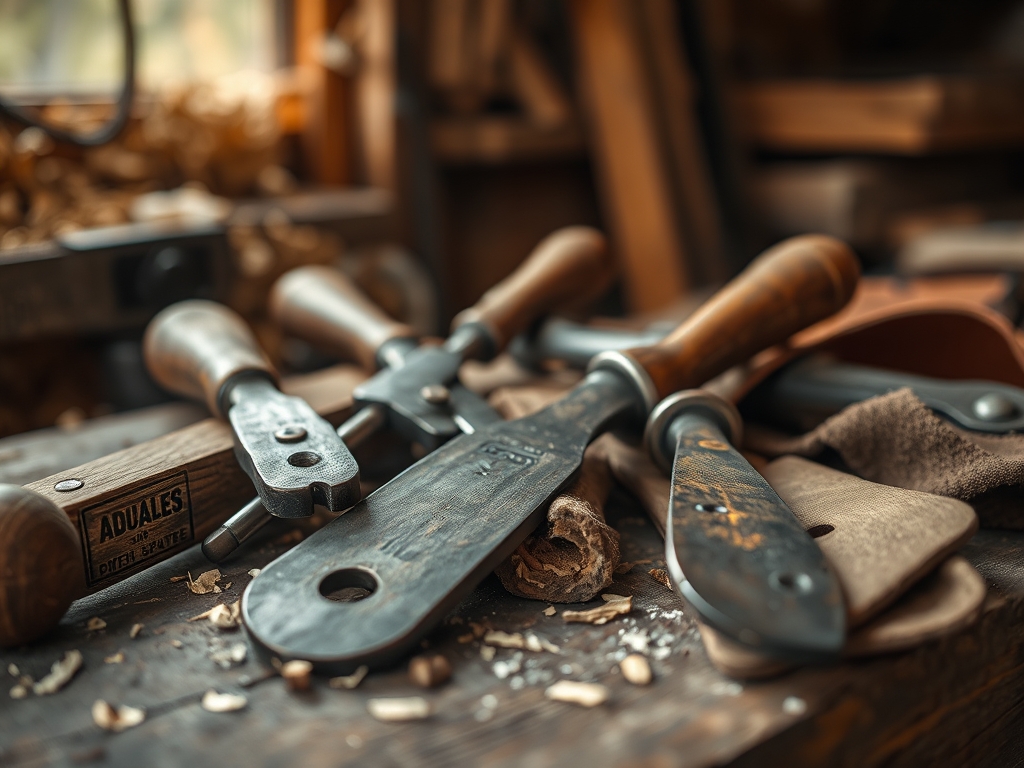
To master the art of the clean finish, your arsenal must be precise. You will need a **high-volume low-pressure (HVLP)** spray system to minimize overspray. Pair this with a **HEPA-rated** dust extractor that features an auto-start function; this ensures that the moment your **oscillating tool** or sander begins to bite into the material, the vacuum is already creating a negative pressure zone. For measuring the air quality, keep a set of digital **calipers** nearby to check the thickness of your filters and an air quality monitor to track PM2.5 levels in real time.
Your material list includes porous hardwoods like oak or mahogany, which require specific grain fillers to prevent "off-gassing" during the drying phase. If you cannot find premium walnut, a great Material Substitution is roasted maple; it offers similar tensile strength and a dark aesthetic but with a tighter grain structure that produces less airborne "fluff" when sanded. You should also have a bone folder on hand for smoothing out masking tape edges to ensure no dust creeps under your protective layers.
THE TEMPO
The "Maker's Rhythm" is all about respecting the physics of evaporation and settling. You cannot rush a big finish. Phase one is the "Clean Sweep," taking roughly 45 minutes to scrub the air using your Advanced Shop Ventilation system on its highest setting before any cans are opened. Phase two is the "Application Pulse," which lasts 20 to 30 minutes depending on the gauge of your finish. Finally, the "Cure Window" requires a full 24 to 48 hours of static air where the ventilation is dialed back to a whisper to prevent moving air from carrying stray lint onto the tacky surface. This tempo ensures that the molecular bonds of your finish cross-link perfectly without environmental interference.
THE CORE METHOD
1. The Negative Pressure Setup
Before the first drop of oil touches the wood, you must establish a directional airflow. Position your intake fans behind you and your exhaust filtration units in front of the workpiece. This creates a laminar flow that pulls particulates away from your face and the project. Use a jeweler's saw to trim any custom filters to fit your specific booth dimensions.
Mastery Tip: This relies on the principle of fluid dynamics. By creating a slight vacuum in the room, you prevent dust from entering through the cracks in the door. The air moves as a cohesive unit rather than swirling in turbulent eddies that trap dust in corners.
2. Grain Hydration and Raising
Wipe the surface with a damp, lint-free cloth to raise the grain. This makes the tiny, broken fibers stand up straight. Once dry, use a high-grit sandpaper to shear them off. This prevents the wood from feeling "fuzzy" once the liquid finish hits the porous cells.
Mastery Tip: This process utilizes capillary action. The water is drawn into the hollow cellulose tubes of the wood, causing them to swell and stand upright. Removing them now ensures the structural integrity of the final film is not compromised by weak, vertical fibers.
3. The Atomized Application
Using your HVLP gun, apply the finish in long, overlapping strokes. Keep the nozzle exactly eight inches from the surface. Use your calipers to check the wet film thickness if you are using a heavy-build epoxy or lacquer. The goal is a consistent ply that levels itself out before the solvents evaporate.
Mastery Tip: Success here is all about surface tension. If the finish is too thick, it will "orange peel" as the surface tension pulls the liquid into beads. Proper ventilation helps solvents flash off at a controlled rate, allowing the liquid to flatten perfectly.
4. The Final Burnish
Once the finish is "hard-dry," use a bone folder or a high-grit polishing pad to burnish the surface. This step compacts the outer layer of the finish, increasing its luster and making it more resistant to scratches. It turns a simple coating into a durable, protective shell.
Mastery Tip: Burnishing works by generating localized friction heat, which slightly softens the top micron of the finish, allowing it to be molded into a perfectly flat plane. This maximizes light reflection and gives you that professional "wet look."
THE TECHNICAL LEDGER
Maintenance & Longevity: To keep your Advanced Shop Ventilation running at peak efficiency, you must blow out the primary filters with compressed air every ten hours of use. Replace HEPA filters every six months to ensure the motor does not burn out from back-pressure.
Material Variations: For a sustainable twist, use recycled bamboo plywood. It has a high silica content, which means it is incredibly hard but produces a very fine, sharp dust that requires even more aggressive filtration than standard pine. Premium builds might utilize stabilized burls, which are dense and require slower sanding speeds to avoid melting the stabilizing resin.
The Correction:
- Fish-eyes: These are small craters caused by silicone contamination. Fix this by sanding back the area and cleaning with a wax remover before re-coating.
- Blushing: A cloudy white haze caused by trapped moisture. Fix this by adding a "retarder" to your finish to slow down the drying time, allowing the moisture to escape.
- Nibs: Tiny bumps caused by dust. Use a rotary cutter or a razor blade to "de-nib" the surface level, then buff the area back to a shine.
Studio Organization: Store your finishing supplies in a climate-controlled cabinet. Extreme temperature swings can change the viscosity of your liquids, making them impossible to spray. Keep your sandpaper organized by grit in a sealed bin to prevent cross-contamination of larger particles onto finer sheets.
THE FINAL REVEAL
There is nothing quite like the moment you flip the switch on your studio lights and see the overhead LEDs reflecting perfectly off your work. No dust, no bumps, just pure, saturated color and a depth that looks three inches deep. Because you mastered your Advanced Shop Ventilation, your piece looks like it was made in a high-tech lab rather than a home studio. The wood grain pops with a three-dimensional quality, and the surface feels as smooth as polished stone. You have officially leveled up from a hobbyist to a master of the craft.
STUDIO QUESTIONS
Why is negative pressure important for finishing?
Negative pressure ensures that air only flows into the clean zone through filtered intakes. This prevents unfiltered, dusty air from being sucked in through gaps in doors or windows, keeping your wet finish pristine and free of debris.
Can I use a standard box fan for ventilation?
A box fan lacks the static pressure capabilities to pull air through high-density HEPA filters. While it moves air, it does not effectively capture fine particulate matter, which is the primary culprit for ruined finishes and lung irritation.
How do I know when my filters need changing?
Watch for a decrease in airflow or a change in the motor's pitch. If you notice dust settling on surfaces more quickly than usual, your filters are likely loaded beyond their porous capacity and need immediate replacement.
What is the best way to clean a dusty shop?
Never use a broom; it just lofts dust into the air. Use a vacuum with a HEPA filter and a wet-mop technique for the floors. This keeps the particulates grounded until they can be physically removed from the environment.