The smell of freshly cut white oak is a sensory trigger that tells your brain it is time to get serious. You run your thumb across the grain; the lignin structures feel dense and cold; yet the edge of your chisel catches on a microscopic burr. This is the friction of frustration. To master Professional Tool Sharpening, you must stop treating it like a chore and start treating it like a dedicated ritual. We are not just rubbing metal on stone here. We are managing the molecular abrasion of high-carbon steel against a suspended abrasive matrix. If your station is a cluttered mess of oily rags and sliding waterstones, your edges will always be mediocre. We want that terrifying, hair-shaving clarity that only comes from a stable, dead-level environment. Imagine a dedicated hub where every movement is ergonomic and every fluid is contained. We are building a station that respects the tensile strength of your tools while honoring the physics of a perfect bevel. Let us get your hands dirty and your edges lethal.
THE STUDIO KIT
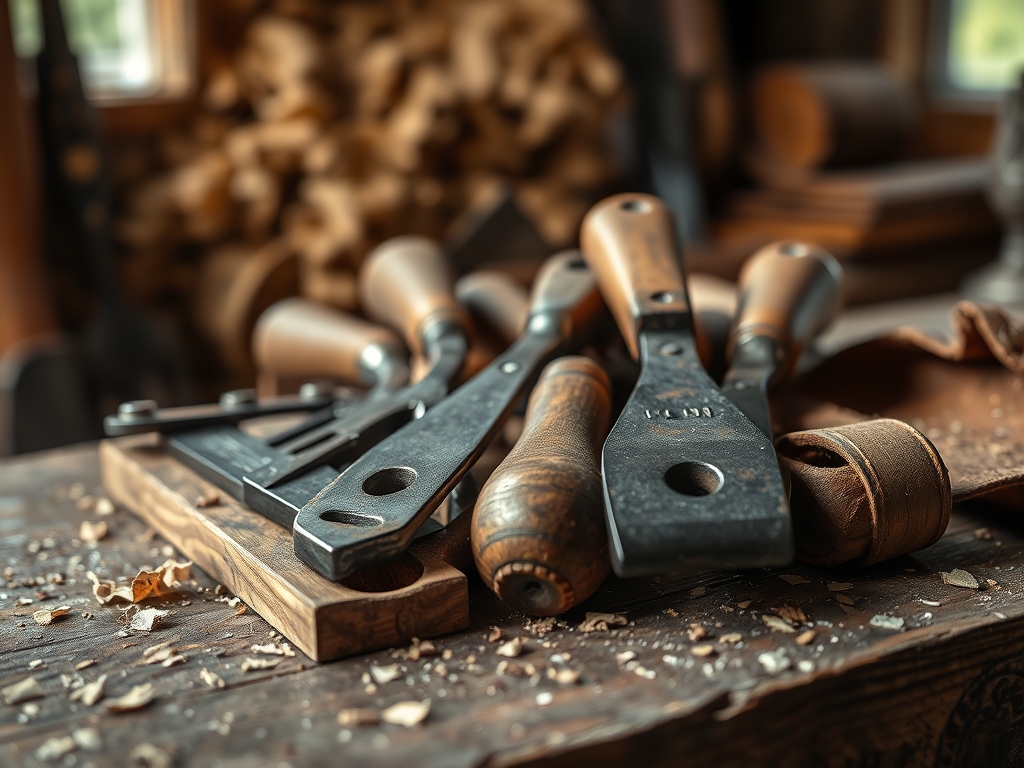
To build a station that lasts, we need materials that resist the hydroscopic nature of a wet workshop. Your base layer should be a thick slab of Baltic Birch plywood or a solid surface material like phenolic resin. Use your calipers to ensure the thickness is a true 18mm; any deviation will lead to vibration that ruins your primary bevel. You will need a set of diamond plates or waterstones, a high-quality honing guide, and a dedicated sink bridge if you prefer wet sharpening. For the hardware, grab stainless steel screws to prevent oxidation from the constant moisture exposure.
Material Substitutions: If you cannot find phenolic resin, a high-density polyethylene (HDPE) cutting board works wonders as a waterproof topper. If a jeweler's saw is not in your kit for fine cutouts, an oscillating tool with a fine-tooth blade will manage the internal plunge cuts for your stone holders. Instead of expensive rubber feet, use scraps of leather burnished with beeswax to create a high-friction, non-slip base that absorbs micro-vibrations during the heavy grinding phase.
THE TEMPO
The "Maker's Rhythm" is all about the flow of energy. Building the physical station takes approximately four hours of focused shop time. The first hour is dedicated to the structural layout; measuring the footprint of your stones and mapping the drainage. The second hour involves the precision cutting and routing of the recesses. The final two hours are for sealing the wood and calibrating the stops. Once the station is built, the rhythm of sharpening itself changes. You move from the "Heavy Grit" phase (slow, deliberate pressure) to the "Polishing Phase" (high-speed, light-touch strokes). This transition is governed by the coefficient of friction; as the grit gets finer, the suction between the stone and the tool increases, requiring a more delicate hand to avoid "stiction" that can mar the finish.
THE CORE METHOD
1. Mapping the Ergonomic Footprint
Start by laying your stones on the baseboard. Use a marking awl to scribe the perimeter of each stone. You want the stones positioned at a height that allows your elbows to remain at a ninety-degree angle. This reduces fatigue and ensures the downward force is distributed evenly across the stone surface.
Mastery Tip: This step relies on spatial ergonomics. By centering the stones over the structural supports of your workbench, you eliminate the "spring" effect of a flexible board. A rigid base ensures that the pressure you apply is translated directly into metal removal rather than board deflection.
2. Routing the Recesses
Using a plunge router or a sharp chisel, create shallow pockets for your stones to sit in. These should be roughly 3mm deep. This prevents the stones from migrating during the reciprocating motion of sharpening. Ensure the bottom of each pocket is perfectly flat to avoid inducing stress fractures in your ceramic stones.
Mastery Tip: This is about mechanical registration. When a stone is nested, it cannot pivot. If a stone pivots even a fraction of a degree, you create a convex edge rather than a flat, repeatable bevel. A locked stone is a predictable stone.
3. Implementing the Fluid Management System
If you use waterstones, you need a way to handle the slurry. Cut a slight gradient or a series of shallow grooves leading to a catchment area. You can use a rotary cutter to trim thin rubber gaskets that line these channels, ensuring water flows away from the wooden core of your station.
Mastery Tip: This utilizes capillary action and gravity. By controlling the flow of the lubricant, you ensure that the abrasive particles (the swarf) are washed away. If swarf builds up, it acts as a secondary, uncontrolled abrasive that scratches your polished finish.
4. Calibrating the Honing Guide Stops
Screw small blocks of wood at specific distances from a reference edge. These act as "jigs" for your honing guide. When you butt the tool against a block, it automatically sets the projection for a 25 or 30-degree angle. Use a bone folder to press adhesive-backed measuring tapes into the recesses for quick adjustments.
Mastery Tip: This is the science of angular consistency. Human kinesthetics are rarely precise enough to hold a perfect angle for hundreds of strokes. These stops remove the variable of human error, ensuring your secondary micro-bevel is identical every time you return to the stones.
THE TECHNICAL LEDGER
Maintenance & Longevity: Your sharpening station lives in a high-moisture environment. Every six months, you must re-apply a coat of marine-grade spar urethane or a heavy wax. Check the flatness of your baseboard with a precision straightedge. Even the best ply can warp over time if the seal is breached.
Material Variations: For a sustainable build, use reclaimed lab-grade slate for the base. It is naturally waterproof and incredibly heavy, providing the inert mass needed for stability. Premium builds might utilize a granite surface plate as the foundation, offering sub-micron flatness that will never degrade.
The Correction:
- The Rocking Stone: If a stone wobbles, do not shim it with paper. Use a small dab of silicone caulk in the corners of the recess to create a custom-molded, vibration-dampening seat.
- The Glazed Surface: If your diamond plates stop cutting, they are likely clogged with metal fines. Use a dedicated cleaning brick or a stiff nylon brush with soapy water to restore the surface porosity.
- The Rusty Bevel: If tools rust after sharpening, your "dry down" process is failing. Integrate a dedicated "oil rag" station at the end of your bench to immediately displace moisture with a light machine oil.
Studio Organization: Store the station vertically when not in use to allow any trapped moisture to evaporate. Do not store it under a window where UV rays can break down the polymeric bonds of your sealants or adhesives.
THE FINAL REVEAL
There is a specific kind of magic that happens when you finish this build. You take a dull, neglected plane iron and move it across your new, rock-solid station. The sound changes from a gritty rasp to a high-pitched, metallic "sing." Because the station is stable, you feel every vibration of the steel. You are no longer fighting the equipment; you are collaborating with it. The result is a mirror-polished edge that slices through end-grain like it is warm butter. This is the peak of Professional Tool Sharpening. You have built more than a wooden tray; you have built a precision instrument that elevates every single project that follows.
STUDIO QUESTIONS
How often should I flatten my waterstones?
You should flatten them before every major session. Use a diamond lapping plate to ensure the surface geometry remains perfectly planar. A dished stone will create a rounded tool edge, which destroys the accuracy of your joinery cuts.
Can I use oil and waterstones on the same station?
It is risky because oil contaminates waterstones, causing them to lose their capillary suction. If you must use both, keep them on opposite sides of the station and use separate wiping cloths to prevent cross-contamination of the lubricants.
What is the best way to prevent rust on the station hardware?
Always use 304 or 316 grade stainless steel fasteners. For added protection, coat the threads in anhydrous lanolin before driving them. This creates a waterproof barrier that prevents the wood from rotting around the screw hole.
Why does my honing guide keep slipping?
This usually happens due to a low coefficient of friction on the guide's clamping jaws. Apply a small strip of 220-grit sandpaper to the inside of the jaws. This gives the metal "teeth" to grip the tool without marring it.