Imagine the sharp, clean scent of freshly planed cedar mingling with the metallic tang of cold-pressed steel. There is a specific, visceral thrill when your fingertips brush across a surface that has been sanded to a grit so fine it feels like liquid silk. To achieve that level of perfection consistently, you cannot just wing it; you need a dedicated Professional Shop Workflow that treats every movement like a choreographed dance. When your tools are positioned to respect the natural arc of your reach, the physics of making shifts from a struggle against friction into a seamless flow of energy.
We are talking about the high stakes of structural integrity. Whether you are dealing with the tensile strength of top-grain leather or the porous absorption rates of kiln-dried hardwoods, your environment dictates your output. A messy desk is not just an eyesore; it is a thermal sink for your productivity. By optimizing the spatial geometry of your studio, you ensure that every cut with your rotary cutter or every mark from your marking awl is precise to the millimeter. This is where we turn a hobbyist's corner into a high-performance engine of creation.
THE STUDIO KIT
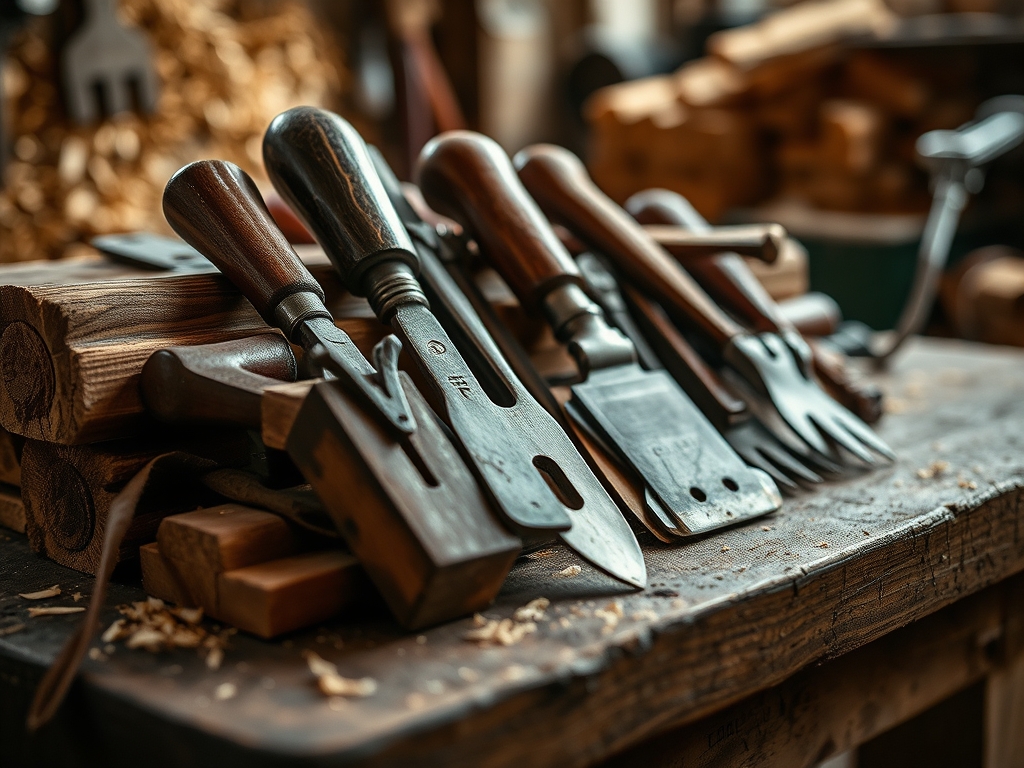
To master this workflow, your kit must be an extension of your own biomechanics. You need a self-healing cutting mat with a high-density polymer core to preserve the edge of your blades. Your primary measuring tool should be a pair of digital calipers capable of measuring down to 0.01mm, because in high-end crafting, "close enough" is a recipe for structural failure. For assembly, keep a bone folder for crisp, permanent creases in fibrous materials and a heavy-duty mallet with a non-marring head to protect the surface finish of your workpieces.
Material choice is equally scientific. If you are working with textiles, understand the denier count and how it affects the drape. For wood or paper, always identify the grain direction before the first incision to prevent splintering or warping.
Material Substitutions: If high-grade vegetable-tanned leather is outside the budget, look for reconstituted leather with a high latex binder content for similar rigidity. If solid brass hardware is too heavy, anodized aluminum offers excellent corrosion resistance with a much lower mass, though you must account for its lower shear strength during installation.
THE TEMPO
The "Maker's Rhythm" is a psychological state backed by neurobiology, but it requires a strict chronological framework. You cannot rush the molecular bonding of adhesives or the stabilization of moisture-sensitive materials.
- The Calibration Phase (15 Minutes): This is the "zeroing" of your space. Check tool sharpness and ensure your work surface is free of debris that could mar your materials.
- The Layout Phase (45 Minutes): Measuring twice is for amateurs; we calculate thrice. This phase involves mapping your cuts to maximize material yield and respect grain orientation.
- The Execution Phase (2-4 Hours): This is the deep-work block. Here, the Professional Shop Workflow keeps you in the zone by ensuring the next tool you need is always within a 45-degree pivot.
- The Curing/Setting Phase (12-24 Hours): Respect the chemistry. Whether it is oil finishes oxidizing or wood glue polymerizing, rushing this stage results in joint failure.
THE CORE METHOD
1. Spatial Zoning and Tool Mapping
Start by dividing your workbench into "Dry," "Wet," and "Impact" zones. Place your oscillating tool and mallet in the impact zone to isolate vibrations. This prevents delicate components in the dry zone from shifting due to kinetic energy transfer through the tabletop.
Mastery Tip: Utilize ergonomic height adjustment. The physics of leverage dictates that for heavy tasks like sawing, your work surface should be at hip height to utilize your core strength. For detail work like engraving, it should be at chest height to stabilize your fine motor tremors.
2. Material Preparation and Grain Alignment
Before making a single mark, inspect your material for internal stresses. In woodworking, this means checking for "reaction wood" that might pinch your blade. In leather or fabric, this means identifying the "stretch" axis. Always align your primary load-bearing seams parallel to the strongest fibers.
Mastery Tip: Understand hygroscopy. Materials like wood and natural fibers expand and contract based on ambient humidity. By allowing your materials to acclimate to your shop's micro-climate for 48 hours, you prevent the piece from warping after the final assembly.
3. Precision Cutting and Edge Treatment
Using a jeweler's saw or a high-carbon steel blade, execute your cuts with consistent downward pressure. Avoid "sawing" back and forth with excessive speed, as the friction creates thermal buildup that can scorch the material or dull the blade's temper.
Mastery Tip: Master the art of the burnish. When you friction-fit or finish an edge, you are essentially compressing the surface fibers to increase density. This creates a mechanical seal that prevents moisture ingress and significantly boosts the lifespan of the edge.
4. Adhesive Application and Clamping
Apply your bonding agent in a thin, even film. Excessive glue does not create a stronger bond; it creates "hydroplaning," where the two surfaces slide against each other. Use consistent clamping pressure to force the adhesive into the micro-pores of the substrate.
Mastery Tip: Leverage capillary action. In some joints, you can fit the pieces together dry and then introduce a low-viscosity adhesive to the seam. The liquid will naturally pull itself into the tightest spaces of the joint, ensuring 100% surface coverage without the mess.
THE TECHNICAL LEDGER
Maintenance & Longevity: Your tools are mechanical investments. Wipe down all steel surfaces with a thin coat of camellia oil to prevent oxidation. Calibrate your measuring squares once a month against a known glass standard to ensure your 90-degree angles haven't drifted into 89.5-degree territory.
Material Variations:
- Sustainable: Cork fabric or mycelium "leather" offer incredible eco-credentials but require specialized pH-neutral adhesives.
- Recycled: Reclaimed timber has high character but may contain hidden "tramp metal." Always sweep it with a magnet wand before machining.
- Premium: Grade A exotic hardwoods or full-grain bridal leathers have the highest tensile strength but require the sharpest tools to prevent tearing.
The Correction:
- The Mistake: A "proud" joint that won't sit flush. The Fix: Do not force it. Use a flush-cut saw to remove a hair's breadth of material, then re-test the friction fit.
- The Mistake: Adhesive squeeze-out staining the finish. The Fix: Wait for it to become "rubbery," then peel it with a plastic scraper. Wiping it wet just pushes the solids deeper into the pores.
- The Mistake: Tool chatter marks on a finished surface. The Fix: Increase your tool speed but decrease your "feed rate." Let the tool do the work rather than forcing the material through.
Studio Organization: Store your finished pieces in a climate-controlled "dark zone." UV light triggers photodegradation, breaking down the molecular bonds in dyes and finishes. Use acid-free tissue paper for wrapping to prevent chemical migration between the storage container and your masterpiece.
THE FINAL REVEAL
There is nothing quite like the moment you step back and see a project where the physics and the aesthetic have finally shaken hands. When you follow a rigorous Professional Shop Workflow, the finished piece has a weight and a "thunk" to it that screams quality. The seams are invisible, the edges are crisp enough to catch the light, and the structural integrity is so solid it feels like it was grown rather than built. You have transitioned from someone who "makes things" to a master of your environment. Every time you walk into your optimized space, you are not just crafting; you are performing at the peak of your creative potential.
STUDIO QUESTIONS
How do I stop my tools from rusting in a garage?
Apply a micro-layer of paste wax or camellia oil to all exposed metal. This creates a hydrophobic barrier that prevents oxygen and moisture from reaching the steel, stopping the oxidation process before it starts. Keep your humidity below 50 percent.
What is the best way to organize small hardware?
Use a modular grid system with transparent bins. Label each bin with the specific gauge, thread pitch, and material type. Storing by "size" rather than "type" allows for faster visual scanning during the assembly phase of your workflow.
Why does my wood glue keep failing?
You are likely "starving" the joint by applying too much pressure or using too little glue. Ensure both surfaces are flat and clean. The goal is a molecular bond where the glue penetrates the fibers, not just sits on top.
How often should I sharpen my rotary blades?
Sharpen or replace them the moment you feel "drag." A dull blade requires more force, which increases the risk of the tool slipping. Precision requires a low-friction interface between the cutting edge and the material surface for clean results.