Imagine the scent of freshly sheared white oak filling your lungs as you run your thumb across a grain so tight it feels like corduroy. There is a specific, primal satisfaction in the way a perfectly tuned chisel slices through cellulose fibers; it is the sound of a crisp autumn leaf snapping, but with the weight of structural permanence. We are diving deep into the soul of craftsmanship today because Mastering the Wood Joinery is not just about sticking two sticks together. It is about negotiating a peace treaty between two living, breathing pieces of organic matter. When you slide a hand-cut tenon into a mortise, you are feeling for that "piston fit" where air pressure actually resists the entry. It is tactile, it is technical, and it is honestly a little bit magical. We are moving beyond the world of cheap metal fasteners and brittle plastic brackets. We are building for the next century, using the very physics of the wood to ensure our creations never wobble, never sag, and never surrender to the relentless pull of gravity.
THE STUDIO KIT
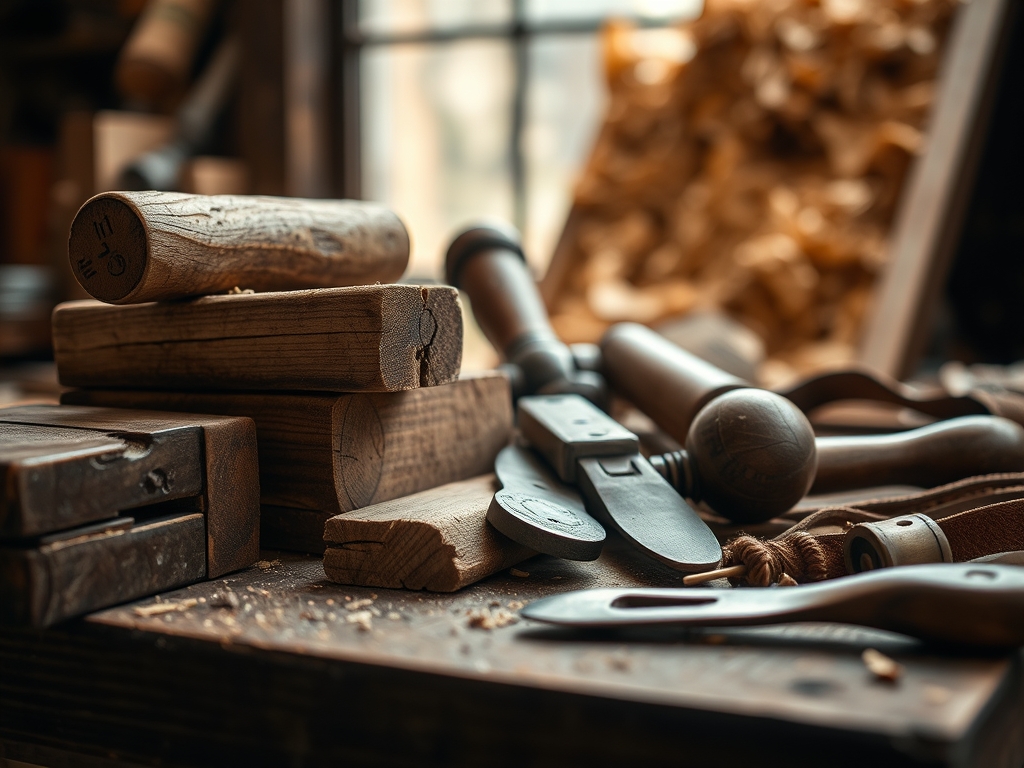
To execute this properly, your workbench needs to look like a high-end laboratory. We start with **hardwood stock**, preferably something with high **tensile strength** like ash or walnut. You will need a set of **bench chisels** with a primary bevel of 25 degrees; these are your scalpels. A **marking gauge** is non-negotiable for scribing lines that actually sever the wood fibers rather than just smudging them with graphite. For precision measurement, grab your **digital calipers** to ensure your tenon thickness matches your mortise width to within a thousandth of an inch. You also need a **mallet** with a urethane or wooden head to provide the necessary kinetic energy without mushrooming your tool handles.
If you cannot source premium hardwoods, let's talk Material Substitutions. High-density plywood can work for practice, but its alternating grain direction makes clean paring difficult. Reclaimed Douglas fir is a sustainable alternative, though its high resin content can gum up your saw teeth. If you are working on a budget, even clear pine allows you to practice the ergonomic movements of the saw, though its soft cellular structure is prone to crushing if your tools are not razor-sharp.
THE TEMPO
The "Maker's Rhythm" is a biological metronome that dictates the quality of your output. You cannot rush the hygroscopic nature of wood. Phase one is the Acclimation Period, which takes 48 to 72 hours; your wood must reach equilibrium with your studio's humidity or your joints will shrink and fail. Phase two is the Layout, a high-focus 60-minute sprint where you use an awl to mark your "shoulders" and "cheeks."
Phase three is the Excavation, taking roughly 30 minutes per joint. This is the heavy lifting where you remove the bulk of the material. Finally, there is the Finesse Phase. This is the slow, meditative paring where you take shavings so thin they are translucent. In total, expect to spend about four hours on a set of four joints. If you try to bypass this tempo, you risk shearing the wood fibers and losing the structural integrity that makes this joint the king of the workshop.
THE CORE METHOD
1. The Surgical Layout
Use your marking gauge to scribe the mortise boundaries based on the thickness of your chisel. By physically cutting a groove into the wood, you create a "track" for your saw to follow later. This prevents the blade from wandering across the porous surface of the grain.
Mastery Tip: This relies on the principle of mechanical registration. A physical groove provides a positive stop for your tool, ensuring that your measurements are transferred with 100 percent fidelity from the gauge to the workpiece.
2. Mortise Excavation
Secure your workpiece and begin removing the internal waste using a mortise chisel. Start in the center and work toward your scribed lines. Use the chisel as a lever to pop out the "chips," but never use the back of the mortise as a fulcrum or you will bruise the wood.
Mastery Tip: Understanding compressive strength is key here. The wood fibers at the ends of the mortise are strongest when compressed vertically. By leaving a tiny sliver of waste until the final pass, you prevent the wood from splitting along the grain lines.
3. Sawing the Tenon Cheeks
Using a fine-toothed backsaw, cut down the grain to define the tenon. You must stay on the "waste side" of your line. The goal is to leave just enough material to allow for a friction fit. If the saw vibrates, check your grip; it should be firm but ergonomic to prevent muscle fatigue.
Mastery Tip: This involves kerf management. Every saw blade has a thickness (the kerf). If you do not account for this width, your tenon will be too thin, leading to a "loose" joint that relies solely on glue rather than mechanical friction.
4. Paring to Perfection
Use a wide bench chisel to shave the tenon cheeks until they slide into the mortise with firm hand pressure. You are looking for a surface that feels like it has been burnished. The fit should be snug enough that you can pick up the entire assembly by the tenon without it falling out.
Mastery Tip: This step utilizes capillary action. When the fit is perfect (around 0.002 inches of clearance), the wood glue will be drawn into the fibers evenly, creating a chemical bond that is actually stronger than the wood itself.
THE TECHNICAL LEDGER
Maintenance & Longevity: A well-made mortise and tenon joint can last centuries if the wood is sealed with an oil-based finish to slow the exchange of moisture. Check the joints annually for "seasonal movement." If a gap appears, it is likely the wood reacting to a drop in humidity.
Material Variations:
- Premium: Black Walnut or Hard Maple offers the best tensile resistance.
- Sustainable: Bamboo ply is incredibly dense but requires carbide-tipped tools to prevent burning.
- Recycled: Old growth heart pine from demolished buildings offers incredible stability due to its high resin content.
The Correction:
- The Gap: If your shoulder has a gap, use a shoulder plane to square the face.
- The Loose Fit: If the tenon is too thin, "shim" it by gluing a thin shaving of the same wood species onto the cheek, then re-pare it.
- The Split: If the mortise splits, you likely used too much force. Inject glue into the crack, clamp it until cured, and refine your chisel technique.
Studio Organization: Store your unfinished components in a flat, stacked "sticker" arrangement. This allows airflow on all sides of the wood, preventing warping or "cupping" while you wait for the next assembly phase.
THE FINAL REVEAL
Look at that! When you pull those clamps off, you are not just looking at a piece of furniture; you are looking at a masterclass in structural engineering. The way the light catches the grain at the junction, the absolute lack of visible gaps, and the sheer "thunk" it makes when you set it on the floor; it is intoxicating. You have successfully mastered the wood joinery by respecting the physics of the tree. This piece is now a monolithic entity, capable of withstanding lateral forces that would snap a screw in heartbeat. You did that with your hands and a bit of sharp steel.
STUDIO QUESTIONS
Why is the mortise and tenon better than screws?
Screws rely on metal-to-wood friction which degrades over time. The mortise and tenon uses massive surface area and mechanical interlocking to create a permanent, structural bond that survives wood expansion and contraction cycles for decades.
What is the ideal tenon thickness?
The golden rule is the "Rule of Thirds." Your tenon should be approximately one-third the thickness of the overall stock. This balances the tensile strength of the tenon with the wall strength of the mortise to prevent structural failure.
Can I use a rotary tool for mortising?
Yes, an oscillating tool or a router can remove waste quickly. However, you must finish the corners with a hand chisel because round holes cannot provide the same mechanical "locking" as the sharp, 90-degree corners of a traditional mortise.
How do I know if my glue is dry?
Most PVA glues reach 80 percent strength within an hour, but you should wait 24 hours for a full cure. The glue should turn from opaque to translucent, signaling that the moisture content has evaporated and the polymer chains have locked.
What if my wood is too oily for glue?
Species like Teak or Ipe have natural oils that inhibit bonding. Wipe the joint surfaces with acetone immediately before applying glue to strip the surface oils, ensuring the adhesive can penetrate the wood's porous cellular structure effectively.