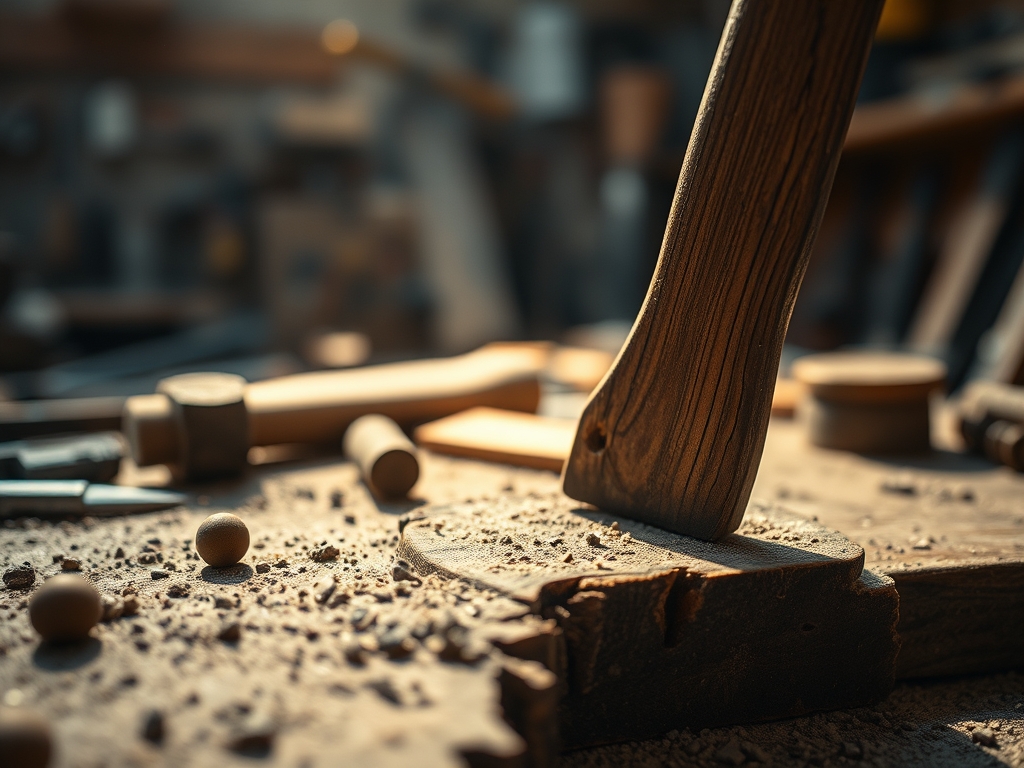
Imagine the scent of freshly sheared white oak hitting the air as your saw teeth bite into the grain. There is a specific, tactile resistance that occurs when steel meets cellulose; it is a dance of friction and fiber density that defines every second in the studio. You are tired of your workpiece sliding across the table like it is on ice, right? Mastering the Bench Hook is the absolute secret to reclaiming your precision and saving your fingertips from a stray blade. This simple device uses the fundamental laws of physics to turn your workbench into a high performance machine.
We are talking about mechanical advantage in its purest form. By utilizing a simple stop block system, you are leveraging the downward and forward pressure of your saw to lock the wood in place. No clamps, no fuss, just pure structural integrity. It is the kind of shop essential that feels like an extension of your own hands. When you feel that first perfectly square cut drop away from the board, you will wonder how you ever functioned without this clever bit of engineering. Let us dive into the grain and get building.
THE STUDIO KIT
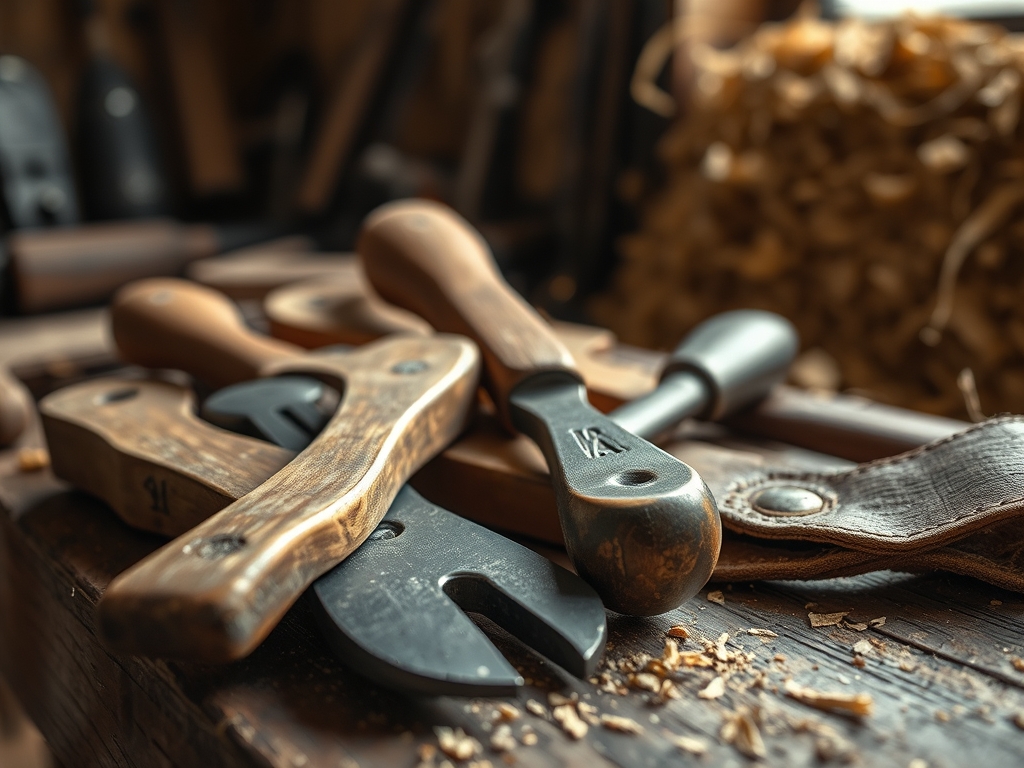
To build a jig that lasts a lifetime, we need materials with high tensile strength and dimensional stability. I prefer using Baltic Birch plywood for the base because its cross-banded layers resist warping under humidity changes. You will need a main board, roughly ten inches by eight inches, and two hardwood "cleats" made from maple or oak. Hardwoods are essential here because they must withstand the constant compression of your saw strokes without deforming.
Your tool kit should include a marking awl for precision layout, a set of digital calipers to verify the thickness of your cleats, and a high quality wood glue with high solids content for maximum bond strength. You will also need a crosscut saw and a try square to ensure every angle is a perfect ninety degrees. For the finish, a simple burnishing tool or a bit of paste wax will keep the surface slick and protected.
Material Substitutions: If you cannot find Baltic Birch, a solid piece of quartersawn cherry is a gorgeous, stable alternative. For the cleats, you can recycle old mahogany furniture scraps. Just ensure the wood is not too porous, as open grain can trap sawdust and ruin the accuracy of your stops.
THE TEMPO
The "Maker's Rhythm" for this project is fast but deliberate. Expect to spend about forty minutes on the actual construction, but remember that the glue cure time is the silent partner in this process.
- Phase One: The Layout (10 Minutes). This is where we use our calipers and squares to map the geometry. Precision here prevents mechanical failure later.
- Phase Two: The Cut (15 Minutes). Sizing your cleats and base. This is the "high energy" part of the build where your saw technique matters most.
- Phase Three: The Assembly (15 Minutes). Applying glue and driving fasteners.
- Phase Four: The Cure (2 Hours). This is the mandatory pause. While the polymers in the glue cross-link, go grab a coffee.
THE CORE METHOD
1. Squaring the Foundation
Start by ensuring your base board is perfectly rectangular. Use your try square to check every corner. If the base is out of alignment, every cut you make using the jig will inherit that error. This is the baseline of your structural integrity.
Mastery Tip: Wood is an anisotropic material, meaning its strength varies with the grain. Always orient the grain of your base board so it runs parallel to the length of the jig to minimize expansion across the width.
2. Preparing the Cleats
Cut two identical strips of hardwood. These are your "stops." One will be mounted on the top front, and the other on the bottom back. Use your marking awl to pre-puncture the screw locations. This prevents the wood fibers from splitting when the fastener enters.
Mastery Tip: Use your calipers to ensure the cleats are exactly the same thickness. Even a half-millimeter difference can create a microscopic tilt in your workpiece, leading to a cut that is not "plumb."
3. The Adhesive Bond
Apply a thin, even layer of wood glue to the mating surfaces. You want just enough for a "squeeze-out" but not so much that the cleat hydroplanes across the base. This creates a chemical bond that is often stronger than the wood itself.
Mastery Tip: This is all about capillary action. The glue seeps into the porous wood fibers and hardens into tiny "fingers" that lock the pieces together. Clamping pressure is vital to force the glue into these microscopic voids.
4. Fastening for Longevity
While the glue is wet, drive two or three countersunk screws through the base and into the cleats. Ensure the screw heads are buried below the surface so they do not scratch your workbench or your workpiece.
Mastery Tip: Placing screws in a staggered pattern rather than a straight line prevents creating a "perforation" effect that could lead to a structural split along the grain line.
5. The Trueing Cut
Once the glue is dry, use your saw to cut a shallow "kerf" into the front cleat. This serves as a permanent visual guide for where your blade will travel in future projects.
Mastery Tip: This kerf acts as a zero-clearance support. By supporting the wood fibers right up to the edge of the cut, you eliminate "tear-out," which is the jagged splintering that happens when fibers are unsupported during a saw stroke.
THE TECHNICAL LEDGER
Maintenance & Longevity: Every six months, check the cleats for wear. If the front stop becomes rounded from use, use a block plane to flatten it back to a crisp ninety degree angle. Re-apply paste wax to the base to maintain a low friction surface.
Material Variations:
- Sustainable: Use reclaimed bamboo plywood; it has incredible tensile strength and a unique aesthetic.
- Premium: Brass-lined stops. Adding a thin strip of brass to the leading edge of your cleat prevents the saw from ever "eating" into the wood.
The Correction:
- The Wobble: If the jig rocks, the base is warped. Fix this by sanding the high spots on the bottom or adding a thin shim of veneer.
- The Gap: If your cuts are not square, the front cleat is crooked. Unscrew it, plane the surface flat, and re-mount using a machinist's square for alignment.
- The Splinter: If the base is chipping, you likely used a low-grade ply with voids. Fill the voids with epoxy and sand flush to restore the surface.
Studio Organization: Store your bench hook vertically on a pegboard or a dedicated shelf. Never leave it on a damp floor; the hygroscopic nature of wood means it will suck up moisture and warp, ruining your precision.
THE FINAL REVEAL
Look at that! You have just built a masterpiece of mechanical utility. The way the cleats "bite" into the edge of your workbench provides a satisfying, rock-solid anchor for all your future joinery. It is sleek, it is functional, and it smells like a professional shop. You have moved beyond just "cutting wood" and into the realm of applied physics. This jig is going to be your best friend for every dovetail, tenon, and mitre you ever cut. Feel that smooth finish? That is the mark of a maker who knows her materials.
STUDIO QUESTIONS
Why use hardwood for the cleats?
Hardwoods like maple have high compressive strength. This prevents the saw from deforming the stop over time, ensuring your cuts remain perfectly square and your measurements stay consistent throughout the project life cycle.
Can I make a double-sided bench hook?
Absolutely. A "miter hook" version includes slots cut at forty-five degree angles. This allows you to flip the jig to handle different types of joinery while maintaining the same ergonomic workflow and stability.
What if my workbench doesn't have a square edge?
The bench hook relies on a ninety-degree "lip" to catch the table. If your table is rounded, you can bolt a temporary "fence" to your table or use a sacrificial strip of wood to create a flat registration point.
Is wood glue enough to hold it?
Glue provides the primary bond via surface tension and fiber penetration, but screws act as permanent clamps. In a high-vibration environment like a woodshop, the combination of both ensures the jig never fails during a heavy cut.