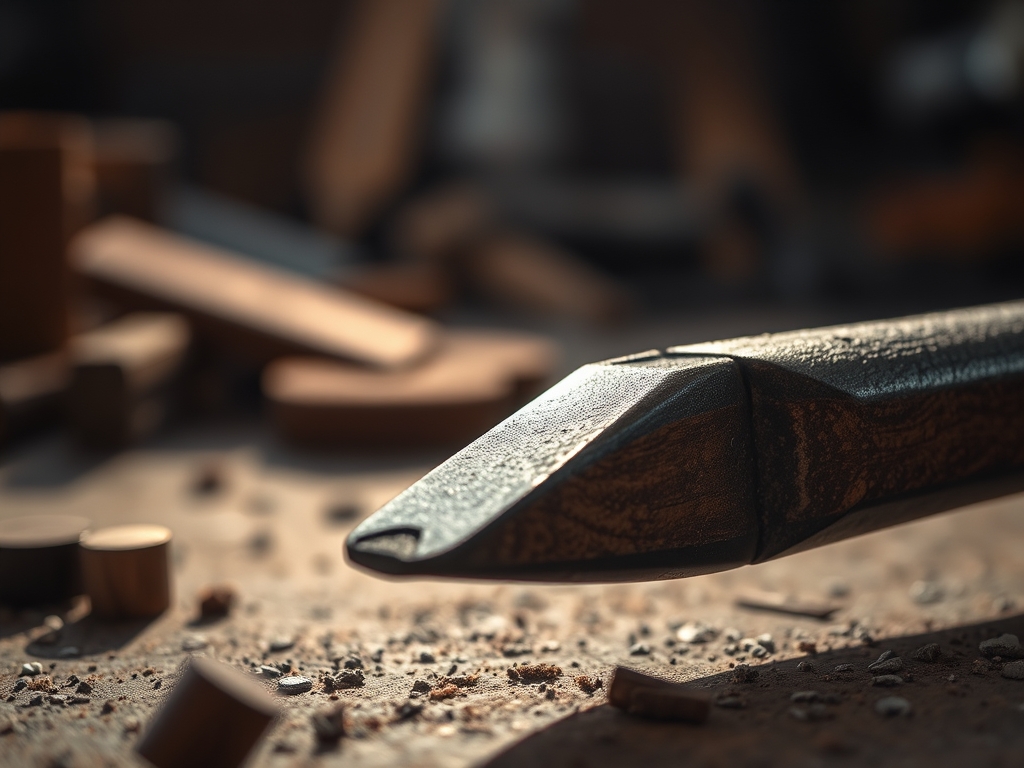
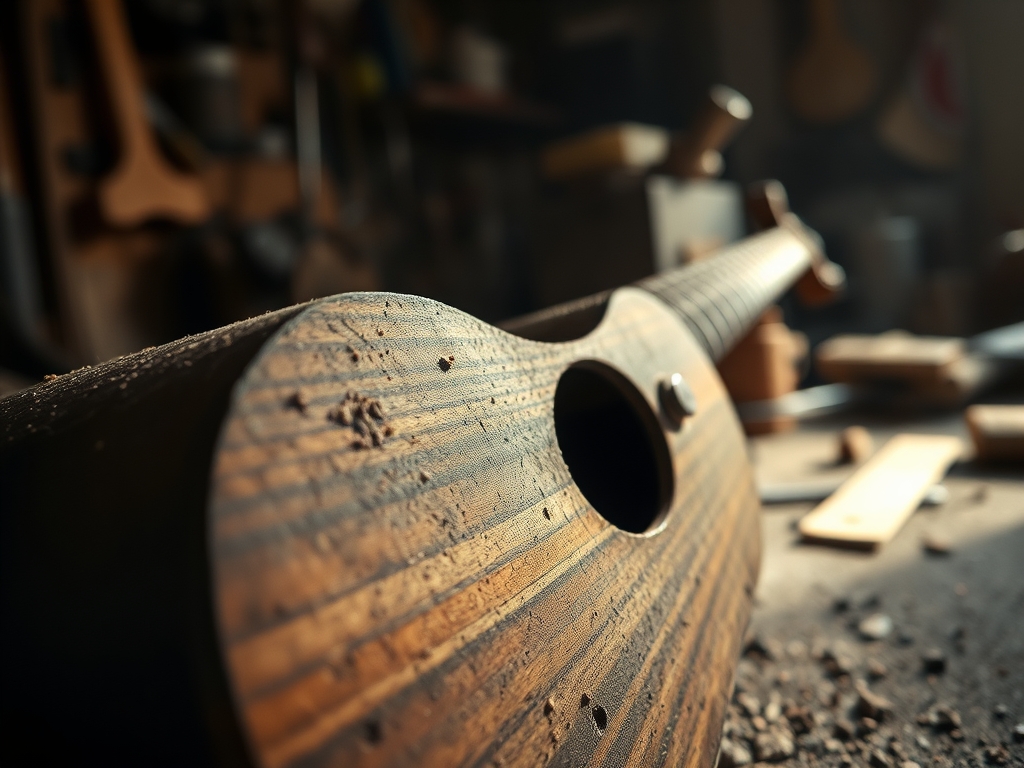
The air in my studio smells like a heady cocktail of cedar shavings and citrus-based solvent. It is a scent that signals the start of something monumental. I remember the exact moment the obsession took hold. I was running my thumb over the grain of an old cello and realized that Building a Musical Instrument is not just an art form; it is a high-stakes physics experiment. You are essentially trying to trap a soul inside a wooden box without crushing the life out of the vibrations. It is tactile, messy, and incredibly rewarding.
When you first hold a raw billet of Adirondack spruce, you feel the potential energy stored in its rigid cellular structure. This wood has a high strength-to-weight ratio, which is vital for acoustic resonance. If the wood is too dense, the sound is choked. If it is too thin, the tensile strength fails under the hundred-plus pounds of pressure exerted by the strings. My journey into luthiery started with that realization. I was no longer just a musician; I was a structural engineer with a very expensive sandpaper habit.
THE STUDIO KIT
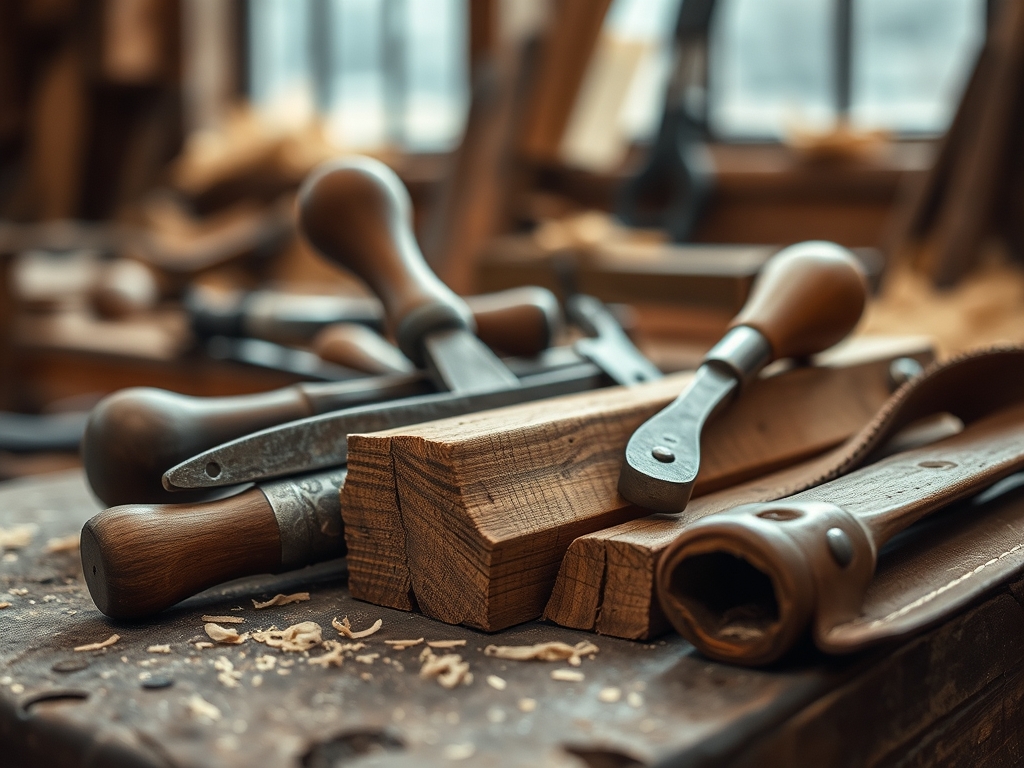
To survive this process, your workbench needs to look like a cross between a surgeon's theater and a high-end woodshop. You cannot just "wing it" with a dull pocketknife. You need digital calipers that measure down to the thousandth of an inch because in the world of acoustics, a millimeter is a mile. My kit includes a set of Japanese pull saws for surgical precision, a variety of finger planes for carving the arching of the plates, and a reliable oscillating tool for the heavier rough-in work.
For materials, we are looking at tonewoods. The top is usually a softwood like spruce or cedar, while the back and sides are hardwoods like maple or rosewood. If you are looking for Material Substitutions due to sustainability or budget, do not sleep on Torrefied Maple. This is wood that has been "baked" in an oxygen-free environment to mimic the cellular breakdown of vintage instruments, providing that aged sound without the fifty-year wait. You can also swap traditional animal-based hide glue for high-performance aliphatic resins if you need a longer "open time" during complex glue-ups.
THE TEMPO
The "Maker's Rhythm" is a real thing, and it is governed by the laws of thermodynamics and humidity. You cannot rush a build. If you glue your braces in a room with 70 percent humidity and then move the guitar to a dry desert, the wood will shrink and crack like a parched riverbed. I break my schedule into three distinct movements.
The first movement is the Dimensioning Phase, which takes about 20 hours of focused labor. This is where you plane the wood to its final thickness. The second movement is the Assembly Phase, requiring 40 to 60 hours. This is the "hurry up and wait" period where glue must cure and wood must be bent using heat and moisture. Finally, the Finishing Phase can take weeks. Applying a traditional French Polish involves hundreds of micro-layers of shellac. It is a test of patience that would make a monk weep, but the result is a finish that is acoustically transparent.
THE CORE METHOD
1. Bookmatching and Joining the Plates
We start by slicing a single piece of wood in half like an English muffin. This ensures that the grain pattern is symmetrical on both sides of the instrument. We use a jointer plane to create a perfectly flat edge on both halves before gluing them together.
Mastery Tip: To ensure a seamless joint, use the "light test." Hold the joined plates up to a bright bulb. If even a sliver of light peeks through, your joint will fail under the lateral tension of the strings. The science here is simple: a perfect fit allows the glue to create a molecular bond that is stronger than the wood itself.
2. Bending the Sides with Thermal Energy
To get those sexy curves, we use a heated bending iron. We dampen the wood to soften the lignin, which is the natural polymer that holds wood fibers together. As the wood heats up, the lignin becomes plastic-like, allowing us to mold it into the "C-bout" or the lower bouts of the body.
Mastery Tip: Always bend with a stainless steel backing strap. This prevents the outer fibers of the wood from splintering when they are under compressive stress. The strap keeps the fibers in place while the heat permanently resets the wood's internal structure.
3. Voicing the Bracing System
The braces are the skeleton of the instrument. They provide structural integrity so the bridge doesn't rip the top off, but they also direct the sound waves. We use a chisel to shave down the braces, a process called "voicing."
Mastery Tip: Tap the wood as you carve. You are looking for a specific resonant frequency. By removing mass from certain areas of the brace, you increase the flexibility of the soundboard, which lowers the resonant pitch and enhances the bass response.
4. Setting the Neck Angle
This is the most terrifying part of the build. The neck must be joined to the body at a precise angle so the strings sit at the perfect height over the fretboard. We use a dovetail joint or a bolt-on system, measuring the geometry with a long straightedge.
Mastery Tip: Use a bone folder or a fine-tooth saw to clear any debris from the joint. Even a tiny wood chip can throw the angle off by several degrees. This is all about geometric alignment; if the neck is off, the instrument will be unplayable regardless of how good the wood sounds.
THE TECHNICAL LEDGER
Maintenance & Longevity: An instrument is a living thing. To prevent the wood from "moving," you must maintain a stable environment. Use a hygrometer to monitor the studio. Aim for 45 to 50 percent relative humidity. Every six months, check the bridge height and the neck relief using a feeler gauge to ensure the tension hasn't caused any structural shifting.
Material Variations:
- Sustainable: Bamboo or reclaimed barn wood. These often require specialized epoxy resins to handle the irregular grain.
- Premium: Master-grade Brazilian Rosewood or "Bearclaw" Sitka Spruce. These materials offer superior dampening coefficients.
The Correction:
- The Gap: If your binding has a gap, do not just fill it with glue. Mix fine wood dust with clear resin to create a "structural putty" that matches the refractive index of the wood.
- The Crack: If a plate cracks during bending, use a cleat. This is a tiny diamond-shaped piece of wood glued across the grain on the inside to stop the fracture from spreading.
- The High Fret: If a fret is buzzing, use a fret leveling beam. Do not just hammer it down; you need to grind the tops of all frets to a uniform plane.
Studio Organization: Store your tonewoods vertically in a temperature-controlled rack. Never lean them against an outside wall, as the temperature differential can cause warping. Keep your calipers and precision tools in a lined drawer to prevent calibration drift from accidental drops.
THE FINAL REVEAL
There is nothing quite like the moment you string up your creation for the first time. The tension builds, the wood groans slightly as it settles into its new life, and then you pluck a string. The sustain should ring out for seconds, a testament to the tight joints and the thin, vibrant plates you labored over. It feels alive. The ergonomic curves fit perfectly against your body, and the tactile feedback of the vibrating wood against your chest is pure magic. You didn't just build a box; you built a machine that converts physical energy into emotion.
STUDIO QUESTIONS
What is the best wood for a beginner luthier?
Sitka Spruce is the gold standard. It is forgiving to carve, has a high modulus of elasticity, and is readily available. It provides a clear, bright tone that helps you hear the results of your bracing choices immediately.
How do I prevent my wood from cracking?
Maintain a consistent humidity level of 45 percent. Wood is hygroscopic, meaning it absorbs and releases moisture. Rapid changes in the environment cause the fibers to expand and contract, leading to structural failure or "checking" in the finish.
Can I use a regular power drill for this?
While you can use a drill for basic holes, a drill press is preferred for accuracy. For detail work, a high-speed rotary cutter or an oscillating tool provides the finesse needed for inlay work without tearing the delicate wood fibers.
Why is my instrument sounding "thuddy" or dead?
The plates are likely too thick or the braces are too heavy. This creates too much mass, which requires more energy to vibrate. You can often fix this by carefully sanding the exterior or reaching through the soundhole to shave the braces.
How long does the glue need to dry?
For structural joints, wait at least 24 hours. While some glues "set" in thirty minutes, the chemical bond needs a full day to reach maximum shear strength. Rushing this step can lead to the instrument literally pulling itself apart under string tension.