
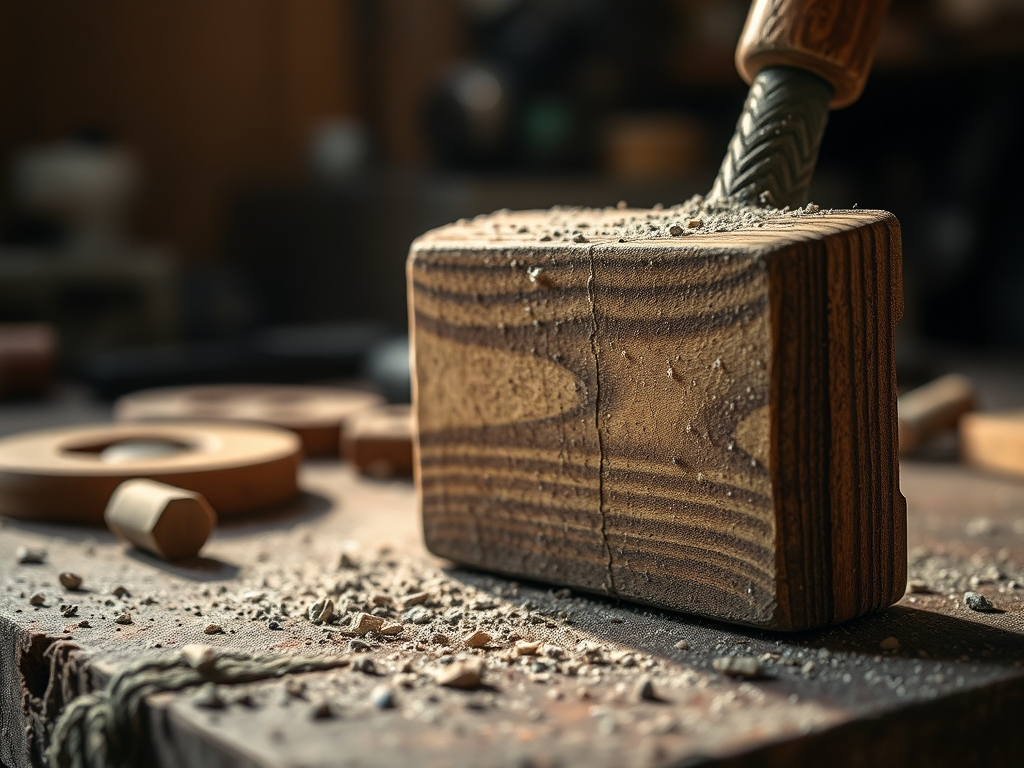
Imagine the scent of freshly milled black walnut hitting your lungs. It is earthy; it is sweet; it is also a microscopic nightmare for your respiratory system. When you are standing in the studio, the tactile sensation of a fine wood grain under your fingertips is the ultimate reward, but that very same beauty creates a hazardous byproduct of fine particulate matter. Achieving Advanced Shop Dust Control is not just about keeping the floor clean; it is about managing the fluid dynamics of air in a high stakes environment. If you can see the dust dancing in a sunbeam, you have already lost the battle against 2.5 micron particles that bypass your natural filters. We are building a system that treats air like a liquid, routing it through smooth walled conduits to ensure every shaving is captured at the source. It is about the physics of static pressure and the satisfying hum of a balanced impeller. Let us get your workspace breathing as clearly as you do when you hit that perfect finish.
THE STUDIO KIT

To master this build, you need a kit that respects the laws of aerodynamics. We are moving beyond the standard shop vacuum into the realm of high volume low pressure (HVLP) extraction. Your primary engine should be a cyclonic separator paired with a high efficiency particulate air (HEPA) filter rated for 0.3 microns. You will need calipers to measure the exact outer diameter of your tool ports, as even a two millimeter gap causes a massive drop in static pressure. Gather several lengths of 4-inch rigid PVC piping or clear polyurethane hose with integrated grounding wire to prevent static discharge. For the fine details, keep a marking awl and a deburring tool handy to ensure every internal joint is smooth. Rough edges inside your pipes create turbulence, which is the enemy of efficient airflow.
Material Substitutions: If rigid ducting is outside your current budget, you can utilize heavy duty flexible hose, but you must keep the runs short to minimize friction loss. Instead of expensive blast gates, you can 3D print custom gates using PETG filament for high tensile strength and chemical resistance. If a full cyclone is too bulky, a DIY "Thein Baffle" made from high density polyethylene (HDPE) provides a surprisingly effective alternative for primary chip separation.
THE TEMPO
Building a system that actually works requires a specific Maker's Rhythm. This is not a project you rush in an afternoon. Phase one is the Audit, taking about three hours to map your tool layout and calculate the total linear feet of ducting required. Phase two is the Infrastructure, which usually spans a full weekend. This involves mounting the collector, running the main trunk lines, and sealing every junction with foil tape. The final phase is Calibration, where you spend four to six hours testing the CFM (cubic feet per minute) at each drop point using an anemometer. The rhythm here is methodical; measure twice, seal once, and never settle for a "good enough" fit.
THE CORE METHOD
1. Mapping the Static Pressure Gradient
Before you cut a single pipe, you must calculate the resistance of your system. Every bend and every foot of hose adds friction. Use your calipers to determine the smallest constriction point in your tool chain. The goal is to maintain a velocity of at least 4,000 feet per minute in the main ducts to keep heavy chips suspended in the airstream.
Mastery Tip: This relies on the Bernoulli principle, where an increase in the speed of a fluid occurs simultaneously with a decrease in static pressure. By minimizing sharp 90-degree elbows and using two 45-degree fittings instead, you reduce the turbulence that causes dust to settle and clog your lines.
2. Sealing the Kinetic Loop
Once your pipes are dry fitted, you must seal every joint. We do not use standard PVC glue because you might need to reconfigure the shop later. Instead, use high quality aluminum foil tape. This ensures the system remains airtight while allowing for future modularity.
Mastery Tip: Air will follow the path of least resistance. Even a pinhole leak creates a venturi effect, sucking in outside air and drastically reducing the suction at your tool. Ensuring a 100 percent airtight seal preserves the integrity of the vacuum throughout the entire length of the run.
3. Grounding for Static Mitigation
Moving dust particles create friction against the plastic walls of your ducts, generating thousands of volts of static electricity. You must run a copper ground wire through the interior of the pipes or wrap it tightly around the exterior, connecting it to the motor housing.
Mastery Tip: This prevents electrostatic discharge. In a high dust environment, a single spark can lead to a deflagration event. Beyond safety, grounding prevents dust from clinging to the interior walls of your clear hoses, maintaining maximum visibility and airflow efficiency.
4. Implementing the Final Filtration Stage
The cyclone catches the big stuff, but the microscopic "ghost dust" is what harms your health. Install a pleated filter with a manual flapper to knock dust into a collection bin. This increases the surface area of the filter significantly compared to a standard cloth bag.
Mastery Tip: This is about porosity and depth loading. A pleated filter allows for a higher air to cloth ratio, meaning your motor does not have to work as hard to push air through the medium. This longevity ensures your motor does not overheat during long milling sessions.
THE TECHNICAL LEDGER
Maintenance & Longevity: Every thirty days, use an oscillating tool or a rubber mallet to gently tap your vertical duct runs to dislodge any settled fines. Inspect your blast gate seals for resin buildup. If you work with oily woods like teak or cocobolo, wipe down the interior of your primary separator with isopropyl alcohol once a quarter to prevent "caking."
Material Variations:
- Sustainable: Use recycled aluminum ducting for a lower carbon footprint and superior fire resistance.
- Premium: Opt for clear reinforced polyurethane hoses; they allow you to see blockages instantly and have a higher gauge thickness for durability.
- Budget: Use 4-inch thin wall "Sewer and Drain" (S&D) pipe, which is lighter and cheaper than Schedule 40 PVC.
The Correction:
- The Mistake: Using a T-junction for a branch line. The Fix: Replace it with a "Wye" fitting to keep air moving in a consistent direction.
- The Mistake: Leaving the filter bag to get more than half full. The Fix: Set a reminder to empty the bin at 50 percent capacity to prevent backpressure.
- The Mistake: Forgetting to ground the system. The Fix: Install a continuous copper wire from the furthest tool to the central unit.
Studio Organization: Store your spare fittings and tape in a climate controlled bin. Moisture can degrade the adhesive on foil tape, and extreme temperature swings can cause PVC to become brittle over time. Keep your anemometer and calipers in a dedicated "Calibration Kit" near the main power switch.
THE FINAL REVEAL
Look at that workspace! The air is crisp, the surfaces are gleaming, and you can actually see the gorgeous tactile quality of your materials without a shroud of grey powder. There is a profound sense of professional pride that comes from hearing that deep, powerful "thunk" when you open a blast gate and feel the raw suction power of a perfectly engineered system. You have moved from a hobbyist setup to a high performance studio. Your lungs will thank you, your finishes will be flawless, and your shop finally feels like the precision laboratory it was meant to be. Now, go make something incredible in that clean air!
STUDIO QUESTIONS
How do I know if my suction is strong enough?
Use an anemometer to measure the feet per minute at the tool port. For most woodworking tools, you need at least 350 to 450 CFM to effectively capture fine dust before it escapes into the room.
Can I use a standard shop vac for a whole shop?
No, shop vacuums are high pressure but low volume. They cannot move enough air to clear the large debris field created by a planer or table saw. They are best for small hand tools like sanders.
What is the best pipe material for dust collection?
Rigid PVC or metal ducting is best. Smooth interior walls minimize friction. Avoid long runs of flexible ribbed hose, as the internal ridges create significant air turbulence and reduce the overall efficiency of your system.
Do I really need a cyclonic separator?
Yes, it is essential for protecting your motor and filter. The cyclone uses centrifugal force to drop heavy chips into a bin, ensuring only the finest dust reaches your expensive HEPA filter, which extends the filter life significantly.