Close your eyes and listen for that crisp, hollow click of steel meeting wood. There is nothing quite like the sensory rush of a sharp edge slicing through the dense, cellular structure of a kiln dried hardwood board. If you want to achieve that glassy, mirror like surface on your joinery, you have to start with the basics of Mastering the Bench Chisel. It is not just about brute force; it is about understanding the molecular resistance of the fibers and the way your blade interacts with the grain direction. When you finally achieve a perfectly flat back on your tool, the friction disappears and the metal feels like it is floating on a cushion of air. We are diving deep into the physics of the blade today. We will transform your toolkit from a collection of blunt instruments into a precision set capable of surgical accuracy. Grab your safety glasses and a cup of coffee because we are about to turn your workshop into a high performance laboratory where the only variable is your own skill.
THE STUDIO KIT
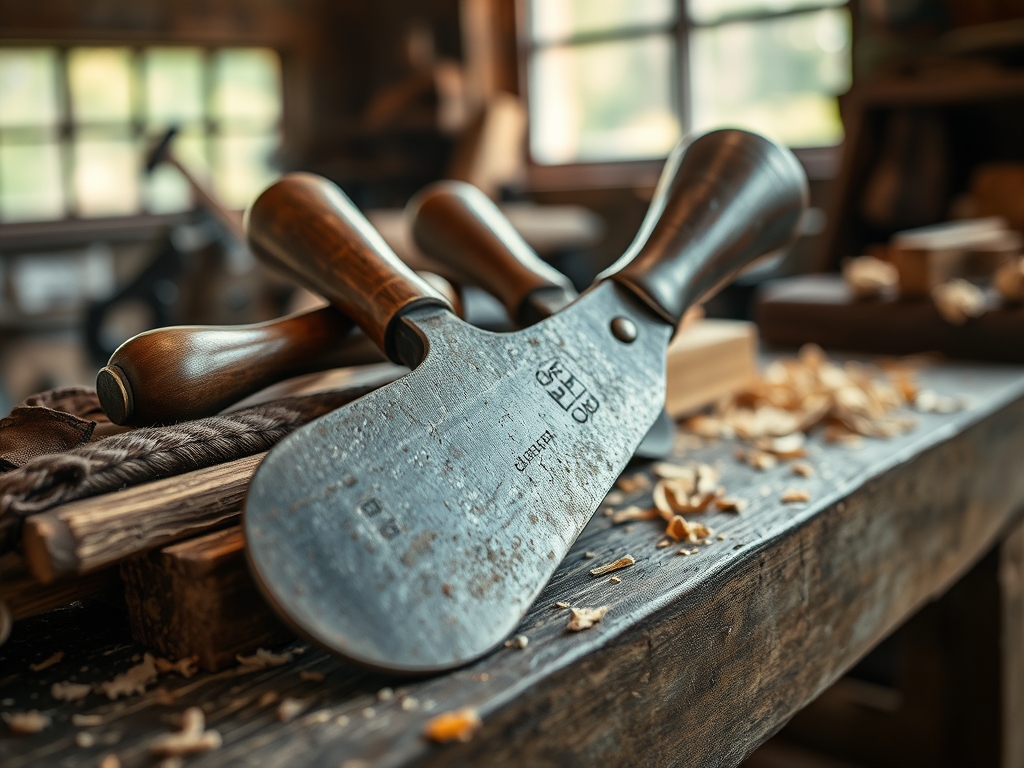
To master this process, you need a kit that respects the tensile strength of high carbon steel. Your primary tool is a set of bevel edge chisels, preferably with an ergonomic handle that allows for a comfortable grip during long sessions of burnishing. You will also need a series of sharpening stones. I recommend diamond plates for their flat surface longevity, followed by water stones ranging from 1,000 to 8,000 grit. To verify your progress, a high quality engineer square and a set of digital calipers are non negotiable. You need to measure deviations in microns, not millimeters.
Material Substitutions: If you cannot source premium water stones, you can use the "Scary Sharp" method. This involves using automotive grade sandpaper adhered to a thick piece of float glass or a granite slab. The key is ensuring the substrate is perfectly planar. For a honing guide, you can use a shop made wooden jig if a professional brass guide is not in the budget. Just ensure the gauge of the metal is consistent throughout the sharpening stroke to prevent uneven wear.
THE TEMPO
The "Maker's Rhythm" is a psychological state where your physical movements sync with the resistance of the material. This project requires a disciplined timeline to ensure the steel does not overheat or lose its temper.
- Phase One: The Flattening (45 Minutes). This is the most labor intensive part. You are removing factory grinding marks and ensuring the back is truly planar.
- Phase Two: The Polishing (20 Minutes). Here, you move through the grits to remove scratches. The tempo slows down as you focus on light, consistent pressure.
- Phase Three: The Honing (10 Minutes). This is the final touch. We are creating a microscopic "wire edge" and then removing it to reveal a razor sharp tip.
Total time: Approximately 75 minutes per chisel. Do not rush. If you feel your shoulders tensing, step away. The tactile feedback from the stone will tell you when the metal is ready to move to the next stage.
THE CORE METHOD
1. Establishing the Reference Surface
Start by marking the back of your chisel with a permanent marker in a crosshatch pattern. Place the chisel flat on your coarsest diamond stone. Using firm, even pressure from your fingertips directly over the cutting edge, move the chisel back and forth. The goal is to see the marker disappear evenly across the entire width of the blade.
Mastery Tip: This process relies on surface tension and friction. If you apply pressure only to the handle, you will create a "dubbed" or rounded edge. Keep your center of gravity over the stone to maintain a constant ply between the steel and the abrasive.
2. Progressing Through the Grits
Once the back is flat, transition to your 1,000 grit stone. You are no longer "shaping" the metal; you are refining the surface finish. Watch for the slurry to change color. This indicates that the stone is cutting into the steel and removing the deeper scratches from the previous stage.
Mastery Tip: The capillary action of the water on your stone helps to float away the swarf (metal shavings). If the stone becomes dry, the swarf will clog the abrasive pores and scratch your polished surface. Always keep a spray bottle nearby.
3. The Final Mirror Polish
Move to your highest grit stone, such as an 8,000 or 10,000 grit. At this stage, the back of the chisel should begin to act as a mirror. Use long, sweeping strokes. You should feel a slight suction between the steel and the stone, which indicates that both surfaces are perfectly flat and in full contact.
Mastery Tip: The structural integrity of the cutting edge depends on these two flat planes meeting at a perfect point. A mirror finish is not just for aesthetics; it reduces friction during the cut, allowing the chisel to slice through porous wood fibers without crushing them.
THE TECHNICAL LEDGER
Maintenance & Longevity
To keep your chisels in peak condition, apply a light coat of camellia oil or specialized tool wax after every use. This creates a hydrophobic barrier that prevents oxidation and rust. Store them in a tool roll made of canvas or leather to protect the edges from accidental contact with other metal tools.
Material Variations
- Sustainable: Look for chisels with handles made from FSC certified hardwoods like beech or ash.
- Recycled: Vintage chisels found at flea markets often feature superior "sheffield steel," though they require significant restoration.
- Premium: Japanese Ouchi chisels use a "laminated" steel technique, combining a hard steel cutting edge with a softer iron backing for vibration dampening.
The Correction
- Mistake: The back is hollow in the center. Fix: Continue on the coarse stone but focus pressure on the high spots until the marker disappears uniformly.
- Mistake: The edge is dubbed or rounded. Fix: You must grind back the bevel until you reach a fresh, flat section of the back.
- Mistake: Deep scratches remain after polishing. Fix: You moved to a higher grit too early. Go back one step and ensure all previous marks are gone.
Studio Organization
Store your sharpening station in a dust free cabinet. Contamination is the enemy of a sharp edge. If a single grain of 200 grit sand lands on your 8,000 grit stone, it will ruin your polish instantly. Use a bone folder to tuck leather guards over your finished blades.
THE FINAL REVEAL
Look at that glow! When you hold your chisel up to the light, the back should look like a sheet of still water. This is the foundation of all fine woodworking. With a perfectly flat back, your paring cuts will be effortless, and your dovetails will fit with a satisfying "thunk." You have successfully navigated the physics of abrasion and the chemistry of steel. This tool is now an extension of your hand, ready to create heirlooms. There is a profound sense of empowerment that comes from knowing exactly how your tools work on a molecular level. You didn't just buy a sharp tool; you built one.
STUDIO QUESTIONS
Why is flattening the back more important than the bevel?
The back serves as the reference surface for every cut. If the back is not perfectly planar, the chisel will dive or wander, making it impossible to create accurate joinery or flat surfaces in your workpiece.
How often do I need to flatten the back?
Ideally, you only perform a heavy flattening once in the tool's life. After that, you simply "polish" the back during regular sharpening sessions to maintain the mirror finish and remove any microscopic burrs or oxidation.
Can I use an oscillating tool to speed up the process?
No. Power tools generate excessive heat that can ruin the steel's temper, making it brittle or soft. Manual sharpening on stones ensures you maintain total control over the metal's temperature and the flatness of the surface.
What is the best way to check for flatness?
Use a high quality engineer square or a dedicated straight edge. Hold the tool up to a strong light source with the straight edge against the back. If any light peeks through, the surface is not yet flat.