The smell of freshly tanned leather and the sharp, metallic tang of cold steel are the only scents that matter when you are standing at the workbench. You know that feeling when a blade slides through a hide like it is cutting through warm butter? That is the result of intentional Professional Tool Selection. It is not just about being fancy; it is about the physics of the cut. When you use a high carbon steel Japanese skiving knife instead of a dull utility blade, you are managing the tensile strength of the fibers rather than just tearing through them. Cheap tools fight the material. They snag on the grain direction and leave ragged edges that no amount of sanding can truly fix. I learned the hard way that a budget tool is actually a tax on your time and your sanity. When the tool becomes an extension of your hand, the boundary between your creative spark and the physical object disappears. We are here to talk about why the right gear changes the molecular soul of your work.
THE STUDIO KIT
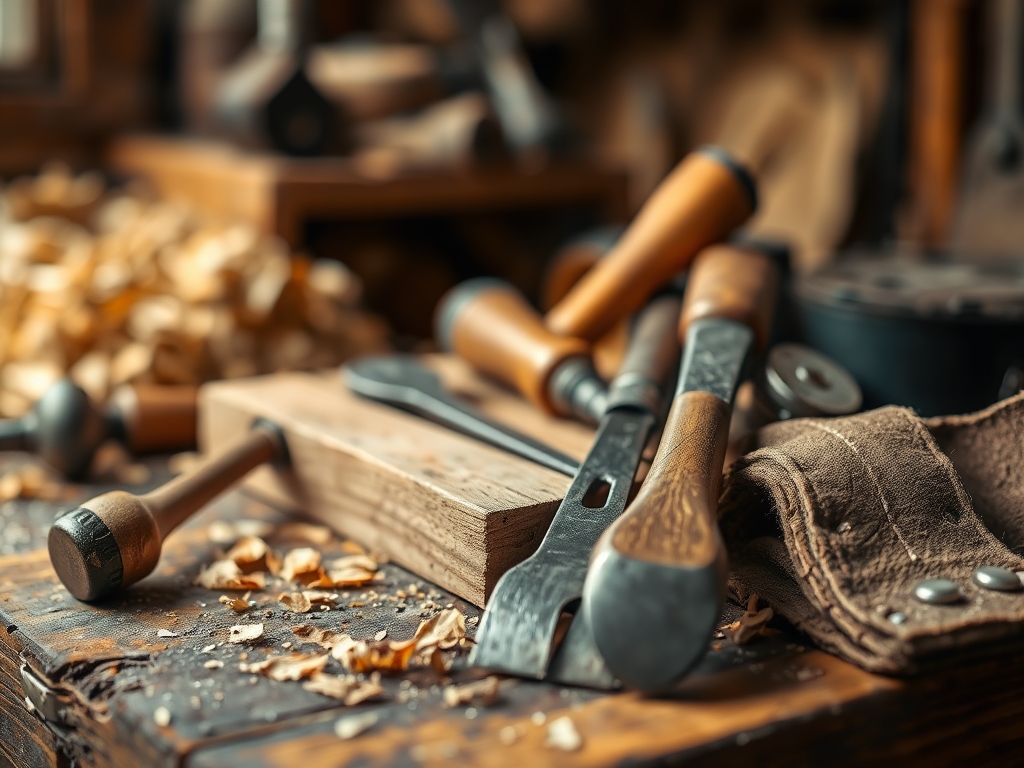
Our primary material today is full grain vegetable tanned leather, specifically a 4 to 5 ounce weight. This material is porous and reactive; it holds a shape because the tannins from tree bark have stabilized the collagen fibers. To manipulate this, we need a kit that respects the science of the medium. You will need a set of diamond chisels made from hardened tool steel to ensure every stitch hole is uniform. A bone folder is essential for creating crisp creases without marring the surface. We also utilize a stainless steel rotary cutter with a 45mm blade for long, straight tracking.
For Material Substitutions, if you cannot source high grade veg tan, you might look at heavy canvas or cork fabric. However, be warned; these materials lack the structural integrity and "memory" of leather. Canvas will fray unless the edges are bound, and cork has a much lower shear strength, meaning it can tear under the same tension that leather handles with ease. Professional tools like digital calipers are non negotiable here because we are measuring thickness down to the tenth of a millimeter to ensure our burnished edges align perfectly.
THE TEMPO
The "Maker's Rhythm" is a real psychological state called flow, but it is dictated by the drying times of your chemistry. Phase one is the Layout and Calibration, which takes about forty five minutes. This is where you measure twice and map out the grain direction to ensure the piece does not stretch unevenly over time. Phase two is the Cutting and Skiving, a focused sixty minute session where precision is paramount.
Phase three is the Assembly and Bonding, requiring thirty minutes of active work followed by an hour of "curing" time for the adhesives. Finally, the Stitching and Finishing phase is the longest, often taking three to five hours depending on the complexity. You cannot rush the capillary action of the edge dye or the friction required to burnish a seam. The rhythm is a dance between high intensity mechanical action and the slow, patient waiting for fibers to bond and waxes to set.
THE CORE METHOD
1. Precision Mapping and Grain Alignment
Before the first cut, you must identify the axle of stretch in your material. Leather stretches more across the belly than along the spine. Use your calipers to verify consistent thickness across the entire panel. By aligning your pattern pieces with the spine, you ensure the finished product maintains its shape under load.
Mastery Tip: This is all about tensile physics. By placing high stress points along the tightest grain, you prevent the "bagging out" effect that ruins amateur projects.
2. The Controlled Skive
Skiving is the process of thinning the edges of the material so that when they are folded or overlapped, the thickness remains constant. Use a fixed blade skiving knife with a hollow ground edge. Angle the blade at a consistent fifteen degrees. You are removing the "flesh side" fibers to reduce bulk without sacrificing the "grain side" strength.
Mastery Tip: This relies on mechanical advantage. A sharper blade requires less downward pressure, which prevents the leather from compressing and distorting during the cut.
3. Adhesive Bonding and Surface Tension
Apply a thin, even layer of contact cement to both surfaces. Wait for the solvent to evaporate until the surface is "tack free" to the touch. This creates a molecular bond rather than a mechanical one. Press the pieces together using a solid brass roller to eliminate air pockets.
Mastery Tip: This utilizes surface tension. If the glue is too wet, it acts as a lubricant and the pieces will slide; if it is too dry, the polymers cannot interlock.
4. The Diamond Punch and Stitching
Using your weighted poly mallet, drive the diamond chisels through the leather into a sacrificial cutting mat. The goal is a clean exit hole. Use a saddle stitch with two needles and waxed polyester thread. The wax reduces friction as the thread passes through the hole, preventing heat damage to the fibers.
Mastery Tip: The saddle stitch creates a locking geometry. Unlike a sewing machine lockstitch, if one thread breaks, the other remains anchored by the friction of the leather.
5. Edge Burnishing and Friction Heat
Sand the edges starting with 220 grit and moving to 800 grit. Apply a small amount of tragacanth gum or water. Use a hardwood burnisher and rub rapidly. The heat generated by the friction melts the natural waxes and fibers together into a smooth, plastic like surface.
Mastery Tip: This is a thermoplastic reaction. You are literally fusing the protein fibers of the leather into a singular, sealed edge that resists moisture.
THE TECHNICAL LEDGER
Maintenance & Longevity: Your steel tools must be wiped down with camellia oil after every session to prevent oxidation. High carbon steel is "hungry" for oxygen and will rust in humid studio environments. Stropping your blades on a leather board loaded with chromium oxide paste keeps the edge at a microscopic sharpness.
Material Variations: While we love the classics, Sustainable Mycelium Leather is an emerging premium alternative. It has a different fiber density and requires lower heat during the burnishing phase. Recycled Bonded Leather should be avoided for high stress items as its ply separation risk is significantly higher.
The Correction:
- The Ragged Edge: Caused by a dull blade. Fix it by sanding back the edge with a high grit paper and re-cutting with a fresh blade.
- The Wonky Stitch: Caused by inconsistent chisel depth. Fix it by using a stitching pony to hold the work at a fixed ninety degree angle to your body.
- Glue Seepage: Caused by over application. Fix it by using a crepe rubber eraser to gently lift the dried cement without staining the grain.
Studio Organization: Store your leather flat in a dark, climate controlled space. UV light breaks down the tannins and causes "sunburn" or discoloration. Use a pegboard system for your professional tools to prevent the delicate edges of your chisels and knives from knocking against each other.
THE FINAL REVEAL
Look at that edge! When you hold the finished piece up to the light, the burnished seam should glow with a glass like finish. Because we prioritized Professional Tool Selection, the stitching is perfectly slanted, the thickness is uniform, and the structural integrity is high enough to last a lifetime. There is a specific weight and "snap" to a well made object that simply cannot be faked. You didn't just make a wallet or a bag; you engineered a functional piece of art using the laws of physics and the best steel money can buy. It feels incredible, doesn't it?
STUDIO QUESTIONS
Why is tool steel better than stainless for cutting?
High carbon tool steel holds a much finer molecular edge than stainless. While stainless resists rust, it is softer and dulls quickly. Professional Tool Selection favors sharpness and edge retention over low maintenance, ensuring cleaner cuts through dense fibers.
What does "burnishing" actually do to the leather?
Burnishing uses friction heat to compress the leather fibers and bind them with natural or added waxes. This creates a smooth, sealed surface that prevents the edges from fraying and protects the internal structure from moisture and environmental degradation.
Can I use a regular hammer for leatherwork?
No, a metal hammer will mushroom the tops of your professional punches and damage the steel. A poly or rawhide mallet absorbs the shock while protecting the tool, ensuring the kinetic energy is transferred efficiently into the cutting edge.
How do I know if my leather is "full grain"?
Full grain leather retains the outermost layer of the hide, showing natural pores and "imperfections." This layer has the highest fiber density and tensile strength. If the surface looks like plastic or lacks visible pores, it is likely corrected grain.
Why is thread thickness measured in "gauge"?
The gauge or "tex" determines the strength and visual scale of the stitch. A higher gauge thread provides more tensile resistance but requires a larger hole. Proper Professional Tool Selection involves matching your thread gauge to your chisel size.