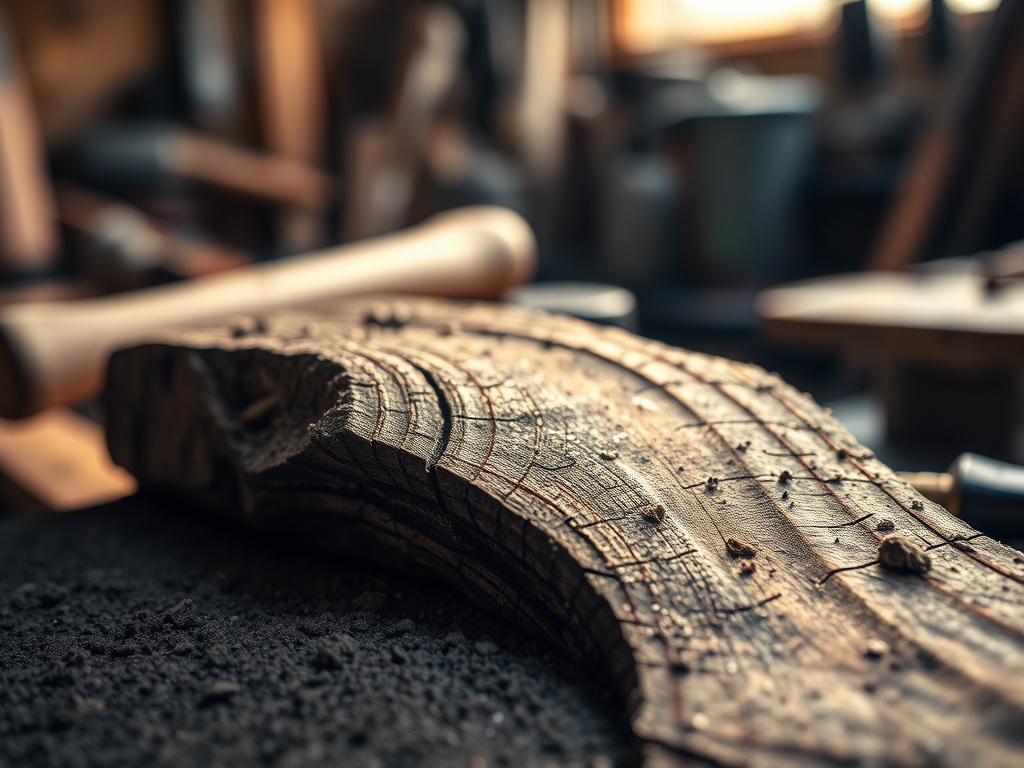
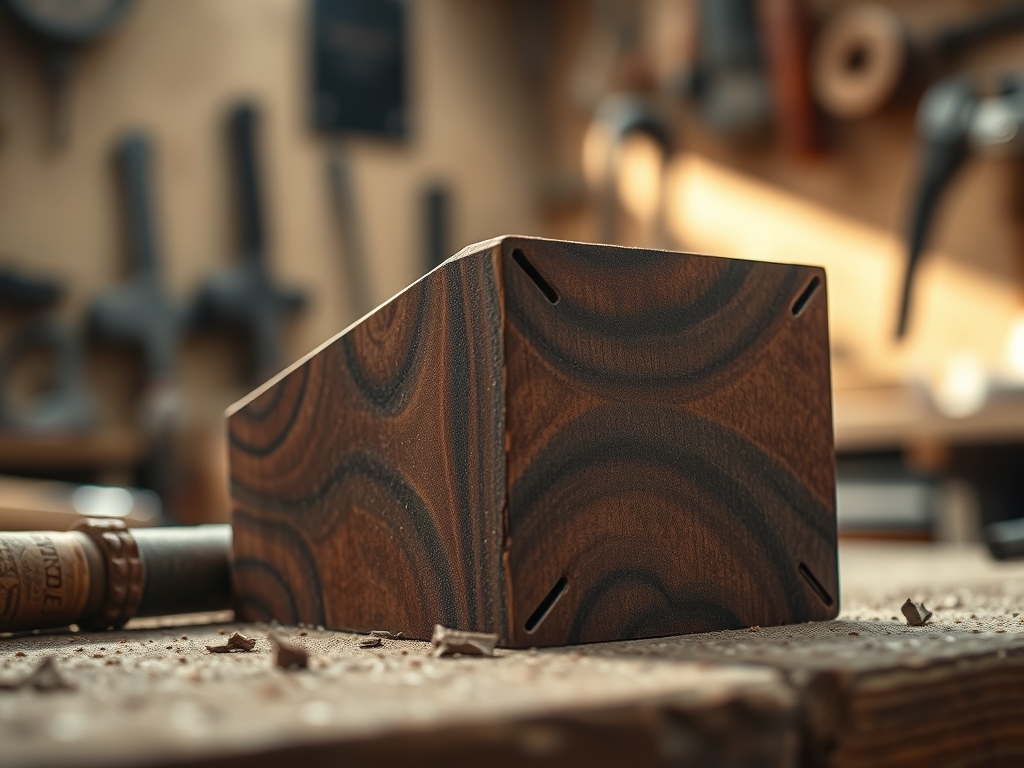
The scent of freshly sheared cedar hits you first; it is a sharp, resinous perfume that signals the start of something serious. You are standing over a slab of walnut, feeling the tensile strength of the grain beneath your fingertips. This is not just about making a pretty box. We are diving deep into Advanced Woodworking Geometry to master the invisible lines that dictate structural integrity. When you run your hand over a raw board, you are feeling the cellular history of the tree. The way those fibers resist your touch tells you exactly how they will react to a blade. If you miss the center point by even a fraction of a millimeter, the entire visual balance collapses. We are hunting for that perfect arc, the one that feels like it was grown rather than cut. It requires a marriage of high-speed intuition and cold, hard physics. Grab your coffee and let's get tactile; we are about to turn math into something you can actually touch.
THE STUDIO KIT

To master these curves, your kit needs to be as precise as a surgeon’s tray. We start with a **hardened steel scribe** and a high-accuracy **marking gauge**. Forget pencils; graphite is too thick for the tolerances we are chasing. You need a **starrett square** to establish your primary datum lines and a pair of **wing dividers** for stepping out distances without cumulative error. For the arcs, a **flexible steel rule** or a **bow template** is essential to maintain a consistent radius across varying grain densities.
Your materials are the stars here. We are looking for straight-grained hardwoods like white oak or cherry, which offer high dimensional stability. If you are working on a budget, high-density birch plywood is a fantastic Material Substitution because its cross-laminated structure prevents the "telegraphing" of grain during complex glue-ups. You will also need a burnishing tool to compress the wood fibers at the edges, ensuring a crisp, professional finish that catches the light just right.
THE TEMPO
The "Maker's Rhythm" is all about managing your internal clock against the drying times of your materials. Total project time for a master-level geometric layout and execution usually spans twelve to fifteen hours, broken into distinct phases. The Preparation Phase takes about two hours; this is where you calibrate your tools and "read" the wood for internal stresses.
The Layout Phase is the most intense, requiring four hours of deep focus. This is where the Advanced Woodworking Geometry happens. You cannot rush this. If your heart rate is too high, your scribe line will wobble. The Execution Phase, involving the actual cutting and shaping, takes another six hours. Finally, the Refinement Phase is a two-hour victory lap where you burnish the edges and apply a finish. Respect the tempo; if you try to compress the layout time, you will spend double that time fixing mistakes in the assembly.
THE CORE METHOD
1. Establishing the Primary Datum
Before you can find a center, you must have a perfectly flat reference edge. Use a jointer plane to create a face that is square to your side. Check this with a light-gap test against your square.
Mastery Tip: Wood is hygroscopic, meaning it absorbs moisture from the air. By establishing a datum and immediately marking it, you account for the "movement" of the wood before the internal tension shifts the board's geometry.
2. The Bisecting Method for True Centers
Instead of relying on a tape measure, use your wing dividers. Set them to what you "think" is the center, then flip them from both edges. The tiny gap between the two points is your margin of error. Divide that gap in half to find the absolute geometric center.
Mastery Tip: This technique relies on geometric redundancy. By referencing from both sides, you eliminate the "end-of-tape" error often found in cheap measuring tools, ensuring your center is accurate to within 0.005 inches.
3. Plotting the Perfect Arc
Secure your pivot point with a center punch to prevent the divider leg from skating. Swing the arc in one continuous, fluid motion. If the arc is large, use a trammel point set on a rigid beam to prevent "chatter" or deflection.
Mastery Tip: The modulus of elasticity in wood means the grain will try to push the blade or scribe off-course. Using a rigid beam for your arc ensures that the tool's path is dictated by physics rather than the varying density of the growth rings.
4. Relieving the Grain for the Cut
Before taking a saw to your arc, use a marking knife to sever the top layer of fibers. This creates a "shoulder" for your saw or chisel to register against, preventing tear-out.
Mastery Tip: This process utilizes capillary action in reverse. By severing the fibers, you prevent the mechanical energy of the saw from "pulling" long splinters out of the wood surface, maintaining the structural integrity of the edge.
THE TECHNICAL LEDGER
Maintenance & Longevity: Keep your steel tools coated in a thin layer of camellia oil to prevent oxidation. Check the calibration of your squares once a month by drawing a line, flipping the square, and checking for alignment.
Material Variations:
- Sustainable: Reclaimed Douglas Fir offers beautiful character but has high earlywood/latewood contrast, making smooth arcs difficult.
- Premium: Quarter-sawn White Oak provides the best tensile strength for thin, delicate geometric work.
The Correction:
- The Overshoot: If you scribe too far, use a damp cloth and a soldering iron to "steam" the fibers back up.
- The Wobble: If an arc is uneven, use a spokeshave to fair the curve, checking the "flow" with your hand rather than your eyes.
- The Gap: If a joint is loose, a mixture of fine sawdust and resin can fill the void, though it is better to "shim" with a shaving of the same wood.
Studio Organization: Store your geometric templates vertically in a climate-controlled environment. Rapid changes in humidity will warp your wooden jigs, rendering your Advanced Woodworking Geometry useless for future precision work.
THE FINAL REVEAL
Look at that! The way the light rolls over that curve is pure magic. When you hit that perfect center point, the whole piece feels "grounded." It has a weight and a presence that factory-made furniture simply cannot replicate. You have taken a chaotic, organic material and imposed a beautiful, mathematical order upon it. Your edges are crisp, your arcs are fluid, and that walnut is glowing like it knows it has been treated with respect. This is not just a project; it is a testament to your precision and your "maker's soul."
STUDIO QUESTIONS
How do I find the center of an irregular board?
Use the string-line method or a large center-finding square. By drawing two lines from the widest opposing points, the intersection provides the centroid, which is the balance point of the irregular shape's mass.
What is the best tool for cutting tight arcs?
A jeweler's saw or a coping saw with a high TPI (teeth per inch) blade is best. These tools allow for rapid direction changes while maintaining a thin kerf, preserving the geometric accuracy of your layout.
Why does my wood splinter when I cut a curve?
Splintering occurs when the blade exits the wood fibers without support. Use a zero-clearance insert on your saw and always "score" your line first with a marking knife to pre-sever the fibers.
How do I ensure my arcs are symmetrical?
Fold a piece of heavy cardstock in half and cut your template once. Unfold it to create a perfectly symmetrical master template. This eliminates the human error inherent in drawing two separate "matching" sides.
Can I use a compass for large woodworking arcs?
Standard school compasses lack the rigidity for wood. Use trammel points attached to a solid wood or metal "beam." This prevents the legs from flexing when they encounter hard grain lines or knots.