Close your eyes and run your fingers across a raw slab of black walnut versus a piece of white oak. Do you feel that subtle, rhythmic resistance? That is the physical manifestation of wood anatomy. When you apply a wipe on varnish or a deep penetrating oil, you are not just painting a surface; you are engaging in a high stakes hydraulic exchange. Understanding Wood Porosity is the difference between a finish that glows from within and a blotchy, uneven mess that looks like a middle school shop project. It all comes down to the vascular system of the tree. Think of wood as a bundle of microscopic straws. Some species, like red oak, have massive "straws" called vessels that drink up finish instantly through capillary action. Others, like maple, have tiny, tightly packed cells that resist penetration. If you ignore these structural realities, your finish will sit on top of the wood like oil on water, eventually peeling or clouding. We are here to master the cellular physics of your project so every drop of finish serves a structural purpose.
THE STUDIO KIT
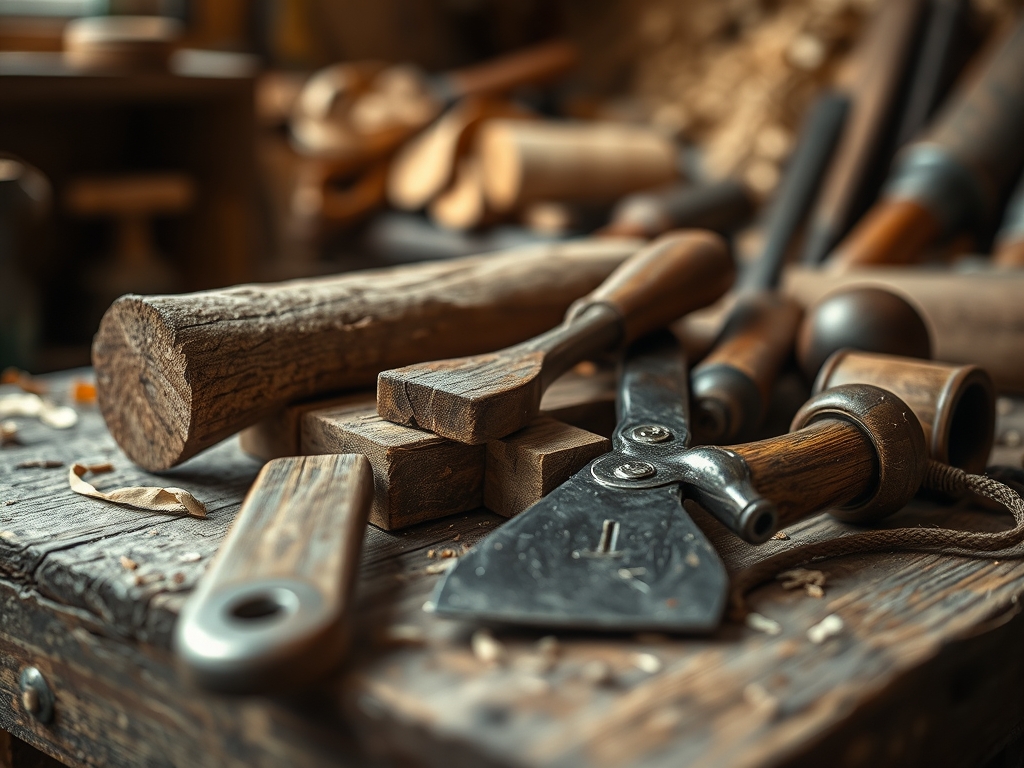
To master the finish, you need a kit that respects the tensile strength and cellular density of your material. Start with a high quality digital caliper to measure the thickness of your veneers; this ensures you do not sand through the face grain into the glue line. You will need a set of silicon carbide sandpaper ranging from 120 to 400 grit. For the application, skip the cheap foam brushes. Grab a natural bristle badger hair brush or a lint free microfiber applicator to manage the surface tension of the liquid.
Your chemical arsenal should include a pre-stain wood conditioner, which acts as a temporary pore filler to equalize absorption. If you are working with open grained woods, keep a silica based grain filler and a flexible steel spreader nearby. For those looking for Material Substitutions, you can swap traditional petroleum based stains for aqueous aniline dyes. These dyes have a smaller molecular structure, allowing them to penetrate dense "closed pore" woods like cherry more effectively than pigment-based stains that simply lodge in the surface scratches.
THE TEMPO
Timing in finishing is less about the clock and more about the Maker's Rhythm. You cannot rush the evaporation rate of solvents. The first phase, surface preparation, takes approximately sixty minutes per ten square feet. This is the "tactile phase" where you feel for burrs and plane tear-out. The second phase, the "saturation window," lasts between fifteen and thirty minutes depending on the ambient humidity. This is when the wood is actively pulling the finish into its intercellular spaces. Finally, the "curing cycle" requires twenty four to seventy two hours. During this time, the finish undergoes cross-linking, a chemical reaction where molecules bond together to form a hard, protective lattice. If you interrupt this rhythm by recoating too early, you trap unevaporated solvents, leading to a finish that remains permanently "soft" or tacky.
THE CORE METHOD
1. The Topographical Assessment
Before opening a single can of finish, perform a "splash test" with a drop of mineral spirits. Observe how quickly the liquid disappears. If it vanishes in seconds, you are dealing with ring-porous wood like ash. If it beads, you have diffuse-porous wood like birch. Use your calipers to check for uniform thickness across the board, as uneven density can indicate "tension wood" which reacts unpredictably to moisture.
Mastery Tip: This test reveals the permeability of the wood. High permeability means the wood has open "lumen" pathways that will suck the finish deep into the heartwood, often requiring a "wash coat" of shellac to prevent over-saturation.
2. Progressive Grit Refinement
Sanding is not just about smoothness; it is about "opening" or "closing" the pores. Start with 120 grit to remove tool marks from your oscillating tool or planer. Move through 150, 180, and 220. For dense woods like ebony or maple, stopping at 180 grit keeps the pores open enough to accept color. If you sand to 400 grit on maple, you effectively burnish the surface, crushing the fibers and sealing the pores so no finish can enter.
Mastery Tip: The science here is surface area. Coarser grits create microscopic valleys that increase the surface area available for the finish to bond with. Over-sanding creates a surface so smooth that the finish lacks the "mechanical tooth" needed for long term adhesion.
3. Managing Capillary Draw
Apply your conditioner or first coat of finish using long, even strokes that follow the grain direction. In areas of "end grain," such as the edges of a table, the pores are cut transversely, acting like open pipes. These areas will absorb finish ten times faster than the face grain. Apply a concentrated layer of grain filler or a "size" (diluted glue) to these edges to equalize the hydrostatic pressure.
Mastery Tip: Capillary action is the ability of a liquid to flow in narrow spaces without the assistance of external forces. By pre-sealing end grain, you create a physical barrier that prevents the "wicking" effect that causes dark, unsightly edges.
4. The Shear Force Leveling
Once the first coat is dry, use a bone folder or a very fine 320 grit sanding block to "knock down" the raised grain. When moisture hits wood, the compressed fibers from the milling process expand and stand up; this is known as grain raise. You must shear these fibers off cleanly rather than pushing them back down.
Mastery Tip: This step ensures structural integrity. By removing the raised fibers, you create a perfectly flat plane for the subsequent layers to build upon, preventing "light refraction" issues that make a finish look muddy or dull.
THE TECHNICAL LEDGER
Maintenance & Longevity: To preserve the ergonomic feel and visual depth of your finish, avoid silicone based waxes. Silicone can seep into the pores and make future refinishing impossible. Use a high quality carnauba wax applied with a soft cloth to provide a sacrificial layer against UV degradation.
Material Variations:
- Sustainable: Bamboo is technically a grass and has a linear vascular structure that requires ultra-thin coats to avoid "pooling."
- Recycled: Reclaimed barn wood is often "thirsty" due to decades of dehydration; it may require a penetrating epoxy to stabilize the friable fibers.
- Premium: Exotic hardwoods like Cocobolo contain natural oils that inhibit the drying of oil-based finishes. A wipe down with acetone is mandatory to strip surface oils before application.
The Correction:
- Blotching: If the color is uneven, you likely skipped the conditioner. Fix it by stripping back with a rotary sander and applying a "gel stain" which sits on the surface rather than penetrating.
- Fish Eyes: These small circular craters are caused by surface contaminants. Clean the area with mineral spirits and add a "flow out" additive to your next coat.
- Orange Peel: This bumpy texture happens when the finish is too thick or the room is too hot. Sand flat and thin your finish by 10 percent with the appropriate solvent.
Studio Organization: Store your finishing oils in a temperature controlled environment. Fluctuations in heat cause the liquid to expand and contract, introducing oxygen into the container which triggers polymerization (skinning over) inside the can.
THE FINAL REVEAL
Look at that glow! When you respect the physics of Understanding Wood Porosity, the wood rewards you with a holographic depth known as chatoyancy. The light now travels through the clear layers of finish, hits the cell walls of the wood, and reflects back at different angles. Your piece is no longer just a "stained board"; it is a stabilized biological specimen. The finish is hard, the grain is crisp, and the tactile response is buttery smooth. You have successfully navigated the microscopic landscape of the timber.
STUDIO QUESTIONS
What is wood porosity?
Wood porosity refers to the volume, size, and distribution of the vessel elements within a wood species. It determines how deeply a liquid finish can penetrate the cellular structure through capillary action and how much product the wood will absorb.
Why does my stain look blotchy?
Blotching occurs when wood has uneven density or "wild grain." Areas with higher porosity drink more stain, creating dark patches. Using a pre-stain conditioner or a wash coat of shellac helps equalize the absorption rate across the entire surface.
Can I sand wood too smooth?
Yes. Sanding to extremely high grits like 400 or 600 on dense hardwoods can burnish the surface. This crushes the wood fibers and seals the pores, preventing the finish from mechanically bonding, which leads to peeling and poor color saturation.
What is the difference between open and closed grain?
Open grain woods, like Oak or Walnut, have large, visible pores that create a textured surface. Closed grain woods, like Maple or Cherry, have microscopic pores that result in a smooth, glass-like surface that resists deep penetration of heavy pigments.