

There is a specific, electric hum that vibrates through your palms when steel meets seasoned timber. It is the sound of absolute intent. You are not just hacking at a block of wood; you are engaging in a high stakes negotiation with cellular structures. Mastering the Mortise requires more than just a sharp edge; it demands an intimate understanding of how lignin and cellulose behave under compression. When you slide that tenon home and hear that deep, vacuum-sealed thud, you are experiencing the peak of mechanical harmony. This is the tactile reward for respecting the grain. We are going for a fit so precise that atmospheric pressure does the heavy lifting for us. Forget the sloppy gaps filled with sawdust and glue; we are chasing a friction fit that defies gravity. It is about the physics of the fiber, the sharpness of your soul, and the unwavering patience of a maker who knows that a fraction of a millimeter is the difference between a heirloom and a firewood scrap.
THE STUDIO KIT
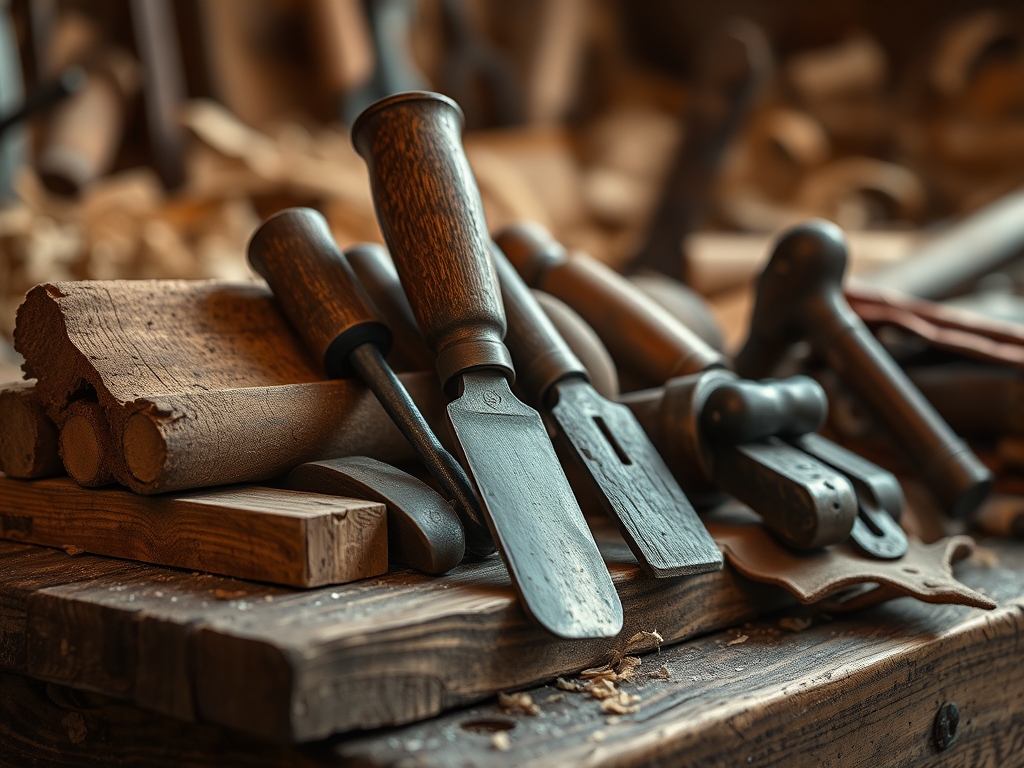
To achieve this level of precision, your toolkit must be an extension of your nervous system. You will need a mortise chisel, specifically one with a thick, rectangular cross-section to resist the lateral forces of prying. Unlike a standard bench chisel, the mortise chisel is designed for heavy impact and deep excavation. Pair this with a marking gauge featuring a hardened steel pin; this tool is vital for scribing lines that actually sever the wood fibers rather than just bruising them. You will also require a mallet with enough mass to transfer kinetic energy efficiently without bouncing. For measurement, skip the tape and reach for digital calipers to verify your tenon thickness to the thousandth of an inch.
Material Substitutions: If you cannot source traditional White Oak or Hard Maple, look for recycled heart pine or even high density bamboo ply. While bamboo lacks a traditional grain direction, its tensile strength is phenomenal. If a dedicated mortise chisel is unavailable, a heavy-duty bench chisel can work, provided you do not use it as a lever. For the marking phase, a striking knife can replace a marking gauge to ensure your layout lines are crisp and deep, preventing the wood from splintering during the initial chop.
THE TEMPO
The "Maker's Rhythm" is a biological metronome that prevents burnout and errors. Mastering the Mortise is not a sprint; it is a three-act play. The Layout Phase takes approximately twenty minutes of intense, silent focus. This is where you calibrate your tools and scribe your boundaries. The Excavation Phase is the loudest and most physical, lasting forty to sixty minutes depending on the depth and wood density. Finally, the Refinement Phase is a slow, meditative dance of paring away translucent shavings.
Total time for a single, perfect joint is roughly ninety minutes. You must learn to listen to the "clink" of the chisel. A high-pitched ring indicates you are hitting solid, healthy wood; a dull thud suggests you are near a knot or a soft pocket of decay. If you rush the tempo, you risk over-compression, which leads to structural failure once the wood naturally expands with seasonal humidity.
THE CORE METHOD
1. Scribing the Boundaries
Start by using your marking gauge to define the width of the mortise. Always reference from the "show face" of the timber to ensure alignment. The Technical Fact here is that wood fibers are essentially bundles of straws; by scribing across them, you are pre-severing the longitudinal bonds.
Mastery Tip: This initial scribe creates a "shoulder" for your chisel to seat into. This utilizes mechanical registration, ensuring your tool cannot wander during the first heavy strike, which maintains the geometric integrity of the opening.
2. The Initial Relief Cut
Place your chisel 1/16th of an inch inside your scribed line, bevel facing the center of the mortise. Strike firmly to create a vertical wall. This prevents the chisel from "creeping" backward into your finished line as the bevel forces the tool toward the waste material.
Mastery Tip: This step manages compressive displacement. By leaving a tiny margin of waste, you provide a buffer for the wood to crush slightly without deforming the final dimensions of your joint.
3. Deep Excavation and Levering
Work from the center outward, taking small "bites" of material. Drive the chisel down, then pull back slightly to snap the chips. As you go deeper, the porous nature of the wood allows the chips to compress, making them easier to remove.
Mastery Tip: Use the principle of lever mechanics. Your chisel acts as a first-class lever. Ensure the back of the chisel stays flat against the mortise wall to distribute pressure and avoid "blowing out" the bottom of the hole.
4. Paring the Walls
Once the bulk is removed, switch to a razor-sharp bench chisel. Use a vertical "paring" motion to shave the walls down to your original scribed lines. This is where you achieve the final, mirror-smooth surface required for a tight fit.
Mastery Tip: Smooth walls maximize surface area contact. This increases the effectiveness of capillary action when glue is applied, drawing the adhesive deep into the grain for a bond that is stronger than the wood itself.
THE TECHNICAL LEDGER
Maintenance & Longevity: To keep your joints tight for decades, always burnish the edges of your tenons. This slightly compresses the outer fibers, allowing them to expand once they are inside the mortise and come into contact with the moisture in the glue. Store your hand tools in a climate-controlled environment to prevent oxidation on the tool steel, which can transfer stains to your workpiece.
Material Variations:
- Sustainable: Paulownia is fast-growing but soft; it requires extremely sharp tools to avoid crushing.
- Recycled: Reclaimed barn wood often contains high mineral content which dulls blades instantly.
- Premium: Black Walnut offers the best "shear strength" and is a joy to chisel.
The Correction:
- The Gap: If your mortise is too wide, glue a thin shaving of the same wood species onto the tenon. This is called "shimming" and restores the interference fit.
- The Split: If the wood splits, inject a high-viscosity cyanoacrylate (CA glue) into the crack and clamp immediately to restore structural integrity.
- The Bottom-Out: If the mortise is too shallow, use a router plane to level the floor to a consistent depth.
Studio Organization: Store your workpieces flat and weighted down. Wood is a dynamic, "living" material that reacts to hygroscopic changes. If you leave a freshly cut mortise open overnight in a humid shop, the fibers may swell, ruining your precision fit by morning.
THE FINAL REVEAL
Look at that. The light catches the edge of the joint, and there is not a single shadow to be found. The transition from the rail to the stile is seamless; it looks as though the two pieces of wood simply decided to grow together. When you run your thumb across the junction, you cannot feel the seam. That is the hallmark of a master. You have successfully navigated the physics of friction and the mechanics of hand tools to create something that feels solid, intentional, and permanent. This is not just furniture; it is a testament to your ability to control the physical world with nothing but steel and sweat.
STUDIO QUESTIONS
How do I know if my chisel is sharp enough?
A truly sharp chisel should effortlessly shave the hair off your forearm or slice through end grain without leaving ragged fibers. If the tool "crushes" the wood rather than cutting it, you need to return to the honing stone.
What is the ideal moisture content for joinery?
Aim for a moisture content between 6% and 8%. This range minimizes the risk of excessive shrinking or swelling after the project is moved into a climate-controlled home, ensuring your tight fit stays tight through the seasons.
Can I use a drill to speed up the process?
Yes, using a forstner bit to remove the bulk of the waste is a common "hybrid" technique. However, you must leave at least 1/8th of an inch of material to be cleaned up by hand to ensure accuracy.
Why does my joint squeak when I put it together?
A squeak indicates a high-pressure friction fit. While it sounds satisfying, it might be too tight. If the fit is too aggressive, it can starve the joint of glue or even cause the mortise to split.
How do I fix a mortise that is slightly crooked?
Use a swan neck chisel or a side-rebate plane to carefully square the internal walls. Consistency in the depth and angle of the walls is more important than the absolute verticality of the hole itself.