Imagine the smell of freshly cut Baltic birch plywood hitting your lungs; it is a sharp, sweet scent that signals the start of something transformative. You are standing in your workspace, and instead of a cluttered bench, you feel the cool, smooth surface of a perfectly sanded board under your palms. This is the foundation of Advanced Shop Organization. When your tools are scattered, your creative momentum dies in the friction of the search. By building a custom tool wall, you are not just tidying up; you are optimizing the ergonomics of your workflow. We are talking about a system where every chisel and caliper has a home that respects its weight and geometry. It is about the tactile satisfaction of a tool clicking into place with zero wiggle room. We are going to dive into the physics of vertical storage, ensuring that your most prized equipment is held by gravity and clever engineering rather than luck. Let us turn that chaotic pile into a high performance gallery of utility that saves you hours of frustration every single week.
THE STUDIO KIT
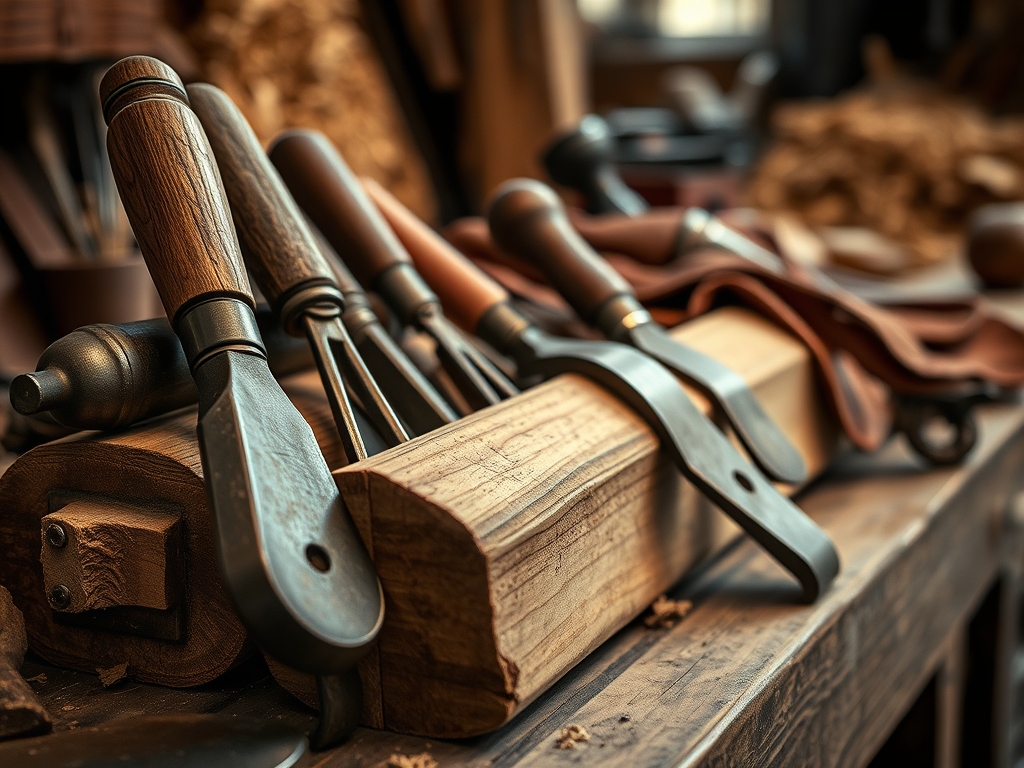
To execute this build, you need materials that offer high tensile strength and dimensional stability. I recommend 3/4 inch Baltic birch plywood because its cross banded layers prevent warping under the weight of heavy metal tools. You will also need a high quality wood glue with strong cross linking properties to ensure your custom holsters do not shear off the backing board. For precision, grab your digital calipers to measure the exact diameter of your tool handles; we are aiming for a friction fit that is snug but accessible.
Your toolkit should include a Japanese pull saw for clean, splinter free cuts and a marking awl to pre puncture your drill points. This prevents the drill bit from "walking" across the grain. If you cannot find Baltic birch, a high density fiberboard (HDF) is a solid Material Substitution because it lacks grain direction, making it incredibly stable for small, intricate tool holders. For a premium touch, use walnut scraps for the tool rests; the high oil content of the wood provides a natural barrier against rust for your carbon steel blades.
THE TEMPO
The "Maker's Rhythm" is all about balancing high intensity labor with periods of critical observation. Phase one is the Audit and Mapping, which takes about two hours. This is where you lay every tool on the floor and group them by frequency of use. Do not rush this; your most used items must live in the "primary strike zone" between your waist and shoulders. Phase two is the Fabrication of Components, which usually spans four to five hours depending on the complexity of your toolset.
The final phase is Installation and Calibration, taking roughly three hours. This is the most rewarding part where you see the vertical plane come to life. Total time investment is about ten hours, but the ROI is massive. You are reclaiming the thirty seconds of "search time" you spend every time you need a specific hex key or a bone folder. Over a year, that adds up to dozens of hours of pure, uninterrupted creative flow.
THE CORE METHOD
1. Mapping the Kinetic Field
Start by laying your plywood sheet flat on your workbench. Arrange your tools on the board exactly how you want them to hang. Use your marking awl to scribe the outline of each tool. Mastery Tip: Consider the center of gravity for each item. If a tool is top heavy, like a heavy duty mallet, the holster must be deep enough to prevent the tool from pivoting outward and falling due to rotational torque.
2. Engineering the Holsters
Using your scrap wood, cut small blocks that will serve as the "cleats" for your tools. For your rotary cutter or saws, you might need to cut thin slots. Mastery Tip: When cutting slots, always account for the kerf of your saw blade. If the slot is too narrow, the tool will bind; if it is too wide, the tool will rattle. Aim for a clearance of 0.5mm over the tool's thickness to allow for seasonal wood expansion.
3. Adhesive Bonding and Mechanical Fastening
Apply a thin, even layer of wood glue to the back of your holsters. Press them onto the marked spots on the plywood. Mastery Tip: Use the principle of capillary action by wiggling the block slightly to spread the glue into the wood pores before clamping. This creates a "starved joint" if done too aggressively, so apply firm, consistent pressure with a spring clamp until the squeeze out appears.
4. Refining the Surface
Once the glue has cured, use a burnishing tool or high grit sandpaper to smooth all edges. This prevents splinters and makes the act of grabbing a tool feel luxurious. Mastery Tip: Pay attention to the grain direction of your cleats. The grain should run parallel to the floor to maximize the shear strength of the wood fibers against the downward force of the tool's weight.
THE TECHNICAL LEDGER
Maintenance & Longevity: Every six months, apply a light coat of paste wax to the wooden holders. This reduces friction and prevents the wood from absorbing moisture, which can lead to swelling and tool binding. Check the tension of any mounting screws to ensure the entire wall remains flush against the studs.
Material Variations: For a Sustainable approach, use reclaimed bamboo flooring; it has an incredibly high Janka hardness rating. For a Premium look, inset small neodymium magnets into the plywood. These magnets provide a "snap" feel when storing metal items like tweezers or drill bits, utilizing magnetic flux to keep small items organized.
The Correction:
- Mistake: The tool falls out when the wall is bumped. Fix: Add a slight 5 degree "back tilt" to the tool shelf so gravity pulls the tool toward the wall.
- Mistake: Plywood edges are splintering. Fix: Use a rotary tool with a sanding drum to ease the edges, then seal with a shellac based primer to lock the fibers.
- Mistake: Tool handles are getting scratched. Fix: Line the inside of the holsters with thin cork or leather scraps to provide a soft, high friction interface.
Studio Organization: Store your leftover plywood scraps in a vertical rack sorted by size. Keep your adhesives in a cool, dark cabinet to prevent the polymers from breaking down. This ensures that when you add a new tool to the wall, your materials are in peak condition.
THE FINAL REVEAL
Look at that! Your workspace has transformed from a chaotic bin of "where is that wrench" into a streamlined, high efficiency command center. The visual clarity of a custom tool wall is a massive psychological boost. You can now see every gauge and ply of your inventory at a single glance. The tactile feedback of pulling a tool from a custom fit holster is addictive. It turns the mundane act of cleaning up into a satisfying ritual. You have successfully engineered a system that respects your craft and your time. Now, go make something incredible in your newly optimized sanctuary!
STUDIO QUESTIONS
How do I choose the best layout for my tools?
Group tools by "task clusters." Keep all measuring tools like calipers and rulers together. Place your most frequently used items in the center of the board, within easy reach of your dominant hand to minimize unnecessary movement during a project.
What is the best way to mount the wall?
Use a French Cleat system. This involves two interlocking 45 degree strips of wood. It provides incredible structural integrity and allows you to lift the entire wall off for cleaning or reconfiguration without unscrewing anything from your studs.
Can I use pegboard instead of custom plywood?
Pegboard is a "one size fits none" solution. Custom plywood allows you to create specific geometries that match your tools exactly. This prevents tools from wobbling or falling, which is essential for protecting the calibrated edges of expensive equipment.
How do I handle tools with odd shapes?
Use a "capture block" method. Trace the tool's silhouette onto a block of wood and use an oscillating tool to carve a custom nest. This ensures the tool is supported at its widest points, distributing the weight evenly across the holster.