Listen, there is a specific, electric hum that vibrates through the studio when you finally lay out a hide of grade A vegetable tanned leather. It is not just about the smell; it is about the tactile resistance of the grain and the way the collagen fibers provide a structural integrity that synthetic materials simply cannot replicate. To master Professional Leather Work, you have to understand that you are not just sewing; you are performing a feat of micro-engineering. We are talking about managing the tensile strength of bonded nylon versus the compression of the leather fibers. When you run your fingers over the surface, you are feeling for density variations that will dictate how your needle passes through. This is where the magic happens. We are going to dive deep into the physics of the saddle stitch, ensuring every single pull of the thread creates a permanent, interlocking bond that looks like high jewelry but performs like armor. Grab your coffee; we are going into the technical weeds.
THE STUDIO KIT
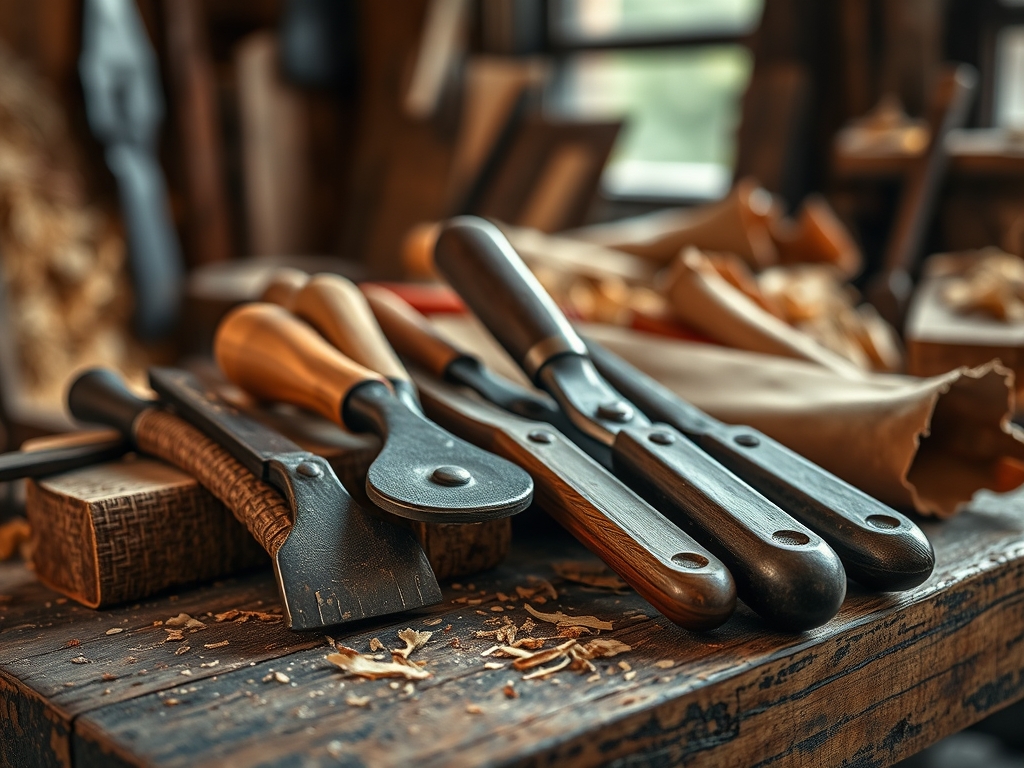
To execute a high end stitch, your kit needs to be an extension of your own ergonomics. We start with diamond chisels or pricking irons. The geometry of the tooth is vital; a 3.0mm spacing creates a delicate, refined look, while a 4.0mm spacing offers a rugged aesthetic. You will also need harness needles, which feature a blunt tip to prevent piercing the thread itself during the crossover.
For the thread, we utilize poly-braided thread coated in a light layer of wax. The wax acts as a lubricant to reduce friction heat during the pull, which prevents the thread from fraying at a microscopic level. You will also need a stitching pony to provide a consistent clamping force, freeing your hands to maintain equal tension on both sides of the leather.
Material Substitutions: If you cannot source premium linen thread, a high quality bonded nylon is a fantastic substitute due to its immense tensile strength and resistance to UV degradation. If you lack a professional maul, a high density polyethylene mallet works, provided it has enough mass to drive the irons through the leather in a single, clean strike to avoid double-striking and blurring the hole alignment.
THE TEMPO
The "Maker's Rhythm" is a real psychological state where your muscle memory takes over the physics of the craft. For a standard card wallet, expect to spend twenty minutes on the layout and marking phase. The actual punching of the holes requires about ten minutes of focused, high intensity striking. The saddle stitching itself is the marathon; it takes approximately one minute per inch of stitching to ensure perfect tension.
If you rush, you lose the "dwell time" required for the leather fibers to settle around the thread. Professional leather work is a game of patience. You are looking for a steady, metronomic pace. This rhythm prevents hand fatigue and ensures that the angle of your needles remains consistent from the first stitch to the last.
THE CORE METHOD
1. The Geometric Layout
Before a single hole is punched, use your wing dividers to scribe a faint line exactly 3mm from the edge. This line acts as your structural guide. Ensure your leather is at the correct moisture content; if it is too dry, the fibers will shatter rather than part.
Mastery Tip: This step utilizes linear alignment physics. By scribing a path, you are ensuring that the force of your pricking iron is distributed evenly across the grain, preventing the leather from "wandering" or warping under the pressure of the stitch.
2. The Piercing Phase
Place your leather on a high density poly punch mat. Hold your pricking iron at a perfect ninety degree angle. If the iron tilts even one degree, your exit holes on the back of the piece will be misaligned, ruining the symmetry.
Mastery Tip: This is about perpendicular force distribution. A clean, vertical strike ensures the "canal" for the thread is uniform. If the canal is crooked, the thread will sit at different depths, causing uneven light reflection on the finished seam.
3. The Thread Loading
Measure your thread to be four times the length of the seam. Thread your first needle, then pierce the thread itself about an inch from the end before pulling it through. Repeat for the second needle on the other end of the string.
Mastery Tip: This creates a mechanical lock. By piercing the ply of the thread, you increase the surface area of the friction bond, ensuring the needle cannot slip off during high tension maneuvers.
4. The First Pass
Insert the left needle through the first hole. Pull it until the thread is centered. Insert the left needle into the second hole, then follow with the right needle into the same hole, ensuring the right needle stays behind the left.
Mastery Tip: We are leveraging opposing tension. By having two needles occupy the same space, you create a figure eight internal structure. This is why a saddle stitch is superior to a machine lockstitch; if one thread breaks, the other remains locked in place by friction.
5. The Casting Loop
As you pull the right needle through, loop the thread over the needle before pulling tight. This "cast" creates a consistent slant in the stitch that mirrors the angle of your pricking iron.
Mastery Tip: This involves torsional physics. The cast forces the thread to twist slightly as it seats into the leather, which maximizes the "bite" of the thread against the internal walls of the hole, preventing the stitch from loosening over time.
6. The Tension Snap
Pull both threads outward with equal force. You should feel a slight "snap" as the thread seats into the leather. Do not over pull, or you will pucker the grain.
Mastery Tip: This is the compression threshold. You want to compress the leather fibers just enough to bury the thread slightly below the surface, protecting it from abrasive wear while maintaining the structural integrity of the seam.
THE TECHNICAL LEDGER
Maintenance & Longevity: To keep your stitched pieces in peak condition, apply a light coat of beeswax to the edges. This seals the fibers and prevents moisture from wicking into the stitch holes via capillary action, which can rot the thread from the inside out.
Material Variations:
- Sustainable: Cork "leather" or pineapple leaf fibers require a smaller needle gauge to prevent tearing the less dense cellular structure.
- Recycled: Bonded leather scraps require a higher wax content on the thread to compensate for the lack of natural oils.
- Premium: Shell Cordovan is so dense that you must use a diamond awl to widen each hole manually to avoid snapping your needles.
The Correction:
- The Knot: If you find a knot mid stitch, do not pull. Use a seam ripper to carefully back out. Never try to force a knot through the leather grain.
- The Misstep: If your stitch slant changes, you likely switched which needle goes in first. Undo the last three stitches and restart the rhythm.
- The Thread Fray: If the thread frays, your needle eye may have a burr. Use a jeweler's saw or fine sandpaper to smooth the eye before rethreading.
Studio Organization: Store your finished projects in a cool, dry place away from direct sunlight. Use acid free tissue paper to wrap pieces, preventing the oils in the leather from migrating and staining other surfaces.
THE FINAL REVEAL
Look at that seam! When you finish a high end saddle stitch, the thread should look like a perfectly synchronized row of soldiers, each slanted at the exact same angle. The way the light catches the waxed surface of the thread against the matte or gloss finish of the leather is pure aesthetic bliss. You have created something that is not just beautiful; it is a testament to mechanical precision. This piece will now age with a beautiful patina, and because of your technical rigor, those stitches will likely outlive us both. It is sturdy, it is elegant, and it is uniquely yours.
STUDIO QUESTIONS
What is the best thread for professional leather work?
Braided polyester thread is the industry standard due to its high tensile strength and resistance to fraying. It does not stretch over time, ensuring the structural integrity of the seam remains constant throughout the life of the leather good.
How do I prevent my leather from scratching?
Use a clean, smooth work surface and cover your stitching pony jaws with soft scrap leather. Always ensure your tools, like calipers and wing dividers, are polished to remove any burrs that could mar the delicate grain of the hide.
Why are my stitches looking uneven?
Uneven stitches usually result from inconsistent tension or changing the order of your needles. To fix this, maintain a "Maker's Rhythm" and always lead with the same hand for every single hole to ensure the thread seats identically every time.
Can I use a regular sewing needle?
No, regular needles are too sharp and thin. Harness needles have blunt tips designed to pass through pre-punched holes without piercing the thread. Using the wrong needle can lead to "thread splitting," which compromises the entire strength of the saddle stitch.
How do I finish the ends of the thread?
Backstitch for two or three holes, then trim the thread close to the surface. For synthetic threads, use a thread burner or lighter to melt the tip into a small bead, then press it flat against the leather to lock it.