Imagine the smell of freshly milled hard maple hitting the air; it is sweet, heavy, and smells like potential. When you run your hand over a raw slab, you are feeling the cellular structure of the wood, which is essentially a bundle of microscopic straws held together by lignin. Most people think of a table as just a place to put things, but when you are Building a Precision Workbench, you are actually constructing a massive, dampened reference plane. It is the foundation of every measurement you will ever take. If your bench is out of true by even a fraction of a millimeter, every joint you cut and every piece you glue will inherit that error. I spent years fighting "ghost gaps" in my joinery before I realized my work surface was the culprit. Now, my bench is a monolithic slab of stability that resists the tensile stress of heavy clamping and the vibration of aggressive chiseling. It feels solid, cold, and incredibly honest. We are not just making furniture here; we are building the ultimate calibration tool for your entire studio.
THE STUDIO KIT
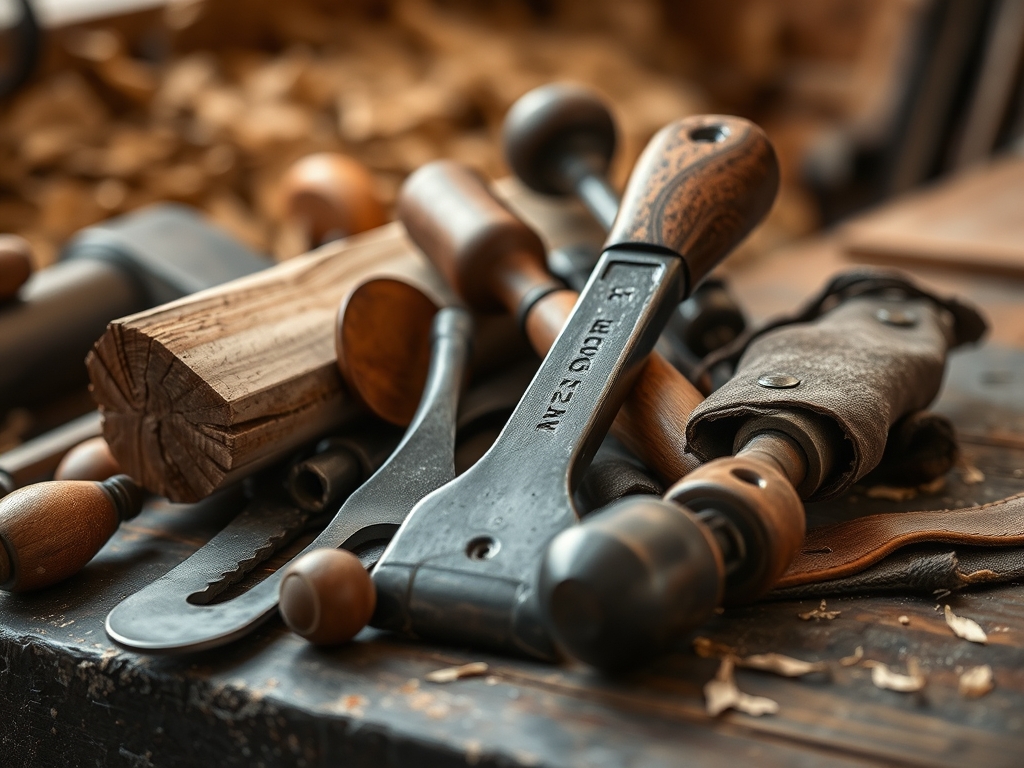
To build a surface this stable, you need materials with high density and low hygroscopicity. I prefer kiln dried European Beech or Hard Maple because their tight grain patterns offer incredible crush resistance. You will need a digital caliper for verifying thickness down to the thousandth of an inch and a high quality starrett square to ensure your laminations are perfectly vertical. For the assembly, grab some PVA glue with a high solids content; this ensures a rigid bond that won't "creep" over time under load. Your tool kit should also include a low angle jack plane for final flattening and a marking awl for layout lines that never smudge.
If you cannot find thick hardwood slabs, you can use a "Material Substitution" of high density MDF or Baltic Birch plywood. However, if you go the plywood route, you must laminate at least four layers together to achieve the necessary mass. The goal is to create a top that acts as a heat sink for vibration. You want something so heavy that it has its own gravitational pull. Do not forget a set of bench dogs and a heavy duty cast iron vise. The vise is the heart of the bench; it needs to be perfectly parallel to the edge to prevent "racking" when you are holding a workpiece.
THE TEMPO
Building a precision bench is a marathon, not a sprint. You have to respect the Maker's Rhythm, which is the natural pace at which materials settle. Phase one is the "Acclimation Period," which takes about seven days. You cannot just bring wood into your studio and start cutting; it needs to reach equilibrium moisture content with your specific environment. If you skip this, the wood will move after you flatten it, ruining your hard work.
Phase two is the "Lamination Sprint," taking about six to eight hours of intense, high energy gluing. Phase three is the "Curing Pause," where you let the assembly sit for forty eight hours to allow the moisture from the glue to dissipate. Finally, the "Flattening Ritual" takes a full afternoon of focused, tactile labor. This is where you use your planes to dial in that perfect surface. Total active time is roughly twenty hours, but the elapsed time is closer to two weeks. Patience is a technical requirement.
THE CORE METHOD
1. Grain Orientation and Milling
Start by inspecting the end grain of your boards. You want to alternate the direction of the growth rings to cancel out internal stresses. This prevents the bench from cupping or bowing as the seasons change. Use your jointer to create one perfectly flat face and one square edge on every board.
Mastery Tip: This utilizes the principle of balanced construction. By opposing the natural tension of the wood fibers, you create a composite structure that remains stable despite changes in atmospheric humidity.
2. The High Pressure Lamination
Apply an even film of glue to both surfaces. Do not just do a squiggle; use a spreader. Clamp the boards every four inches. You should see "squeeze out" along the entire seam. This ensures there are no microscopic voids inside the bench top.
Mastery Tip: This relies on capillary action to draw the adhesive into the wood pores. Excessive clamping pressure is necessary to overcome the surface tension of the glue and bring the wood fibers into intimate contact for a molecular bond.
3. Precision Flattening
Once the glue is cured, use a long straight edge to find the high spots. Use a jack plane to remove material diagonally across the grain. Finish with a smoothing plane going with the grain. Check your progress constantly with a pair of winding sticks to ensure there is no twist in the surface.
Mastery Tip: This process creates a datum surface. In physics, a datum is a starting point for all measurements. By eliminating "wind" or twist, you ensure that any piece of wood laid on the bench is supported on a perfectly flat plane.
4. Finishing and Burnishing
Sand the surface up to 220 grit, then apply a "film-free" finish like boiled linseed oil and wax. You want the wood to be protected but not slippery. Once the oil is dry, use a smooth piece of scrap wood to burnish the surface, compressing the top fibers for extra durability.
Mastery Tip: Burnishing increases the surface hardness of the wood through mechanical compression. This makes the bench more resistant to dings and scratches without making it brittle like a polyurethane coating would.
THE TECHNICAL LEDGER
Maintaining a precision bench is about managing humidity and physical wear. Every six months, you should run a straight edge over the top. If you see light underneath, it is time for a quick "touch up" with the smoothing plane. For longevity, keep the bench away from direct heat sources or damp walls.
Material Variations:
- Sustainable: Reclaimed Douglas Fir (requires more thickness for the same rigidity).
- Recycled: Laminated beams from old construction (high stability due to age).
- Premium: African Bubinga (incredible density and weight, but very expensive).
The Correction:
- Mistake: The top has a "cup" across the width. Fix: Use a scrub plane to remove the high edges and re-flatten.
- Mistake: Glue joints are opening up. Fix: Use a syringe to inject epoxy into the gap and re-clamp immediately.
- Mistake: The bench "walks" or wobbles during use. Fix: Increase the mass of the base by adding a sand-filled shelf at the bottom.
Studio Organization: Store your bench in the center of the room if possible to allow for airflow on all sides. Never leave a damp project sitting on the surface for more than an hour, as this can cause localized swelling of the wood fibers.
THE FINAL REVEAL
There is nothing quite like the first time you lay a spirit level on your finished bench and the bubble sits dead center in every direction. It is a moment of pure, nerdy triumph! Your bench is now more than just furniture; it is a high performance piece of studio equipment. When you drop a chisel onto this surface, it doesn't bounce; the energy is absorbed by the massive density of the wood. It is quiet, it is heavy, and it is perfectly flat. You can now build with a level of confidence you never had before. Every measurement starts here, and because you built it with precision in mind, your work is going to be flawless.
STUDIO QUESTIONS
What is the best wood for a precision workbench?
Hard Maple or European Beech are top choices due to their high Janka hardness and tight grain. These species offer the necessary density to resist marring while providing a stable, heavy mass that dampens tool vibrations during intricate work.
How thick should a precision workbench top be?
A minimum thickness of three inches is recommended for solid wood. This provides enough mass to prevent the top from flexing under clamping pressure and allows for multiple re-flattening sessions over the decades without compromising the structural integrity of the bench.
Why is my workbench top warping after flattening?
This usually happens if the wood was not fully acclimated to your studio's humidity. If the moisture content is uneven, internal stresses will cause the wood to move as it dries. Always let your lumber sit for a week before milling.
Do I need a finish on my workbench?
Yes, but avoid thick films like varnish. A penetrating oil and wax finish protects the wood from glue spills and moisture changes while maintaining a tactile, non-slip surface. This allows you to easily "refresh" the surface with a plane when needed.